

Paris is a city of addresses, and some carry more than location. They carry a form of memory.
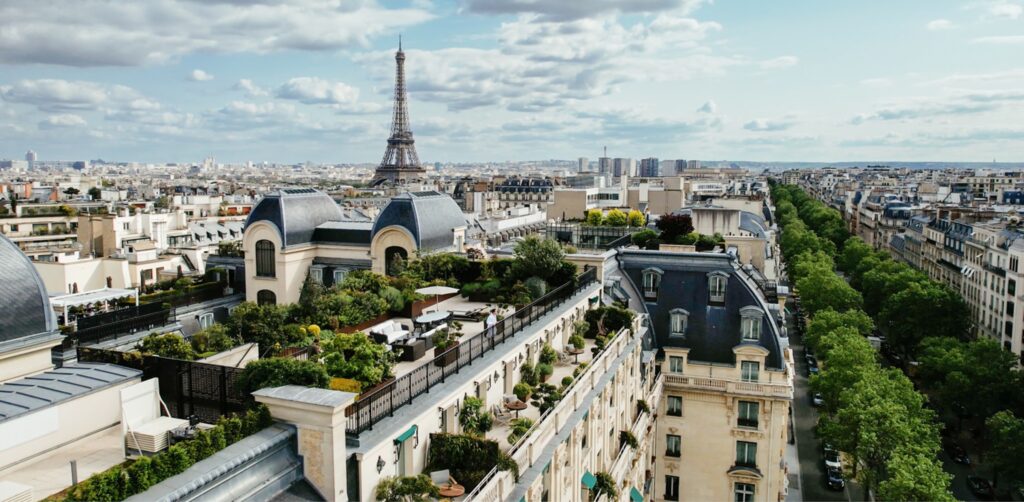
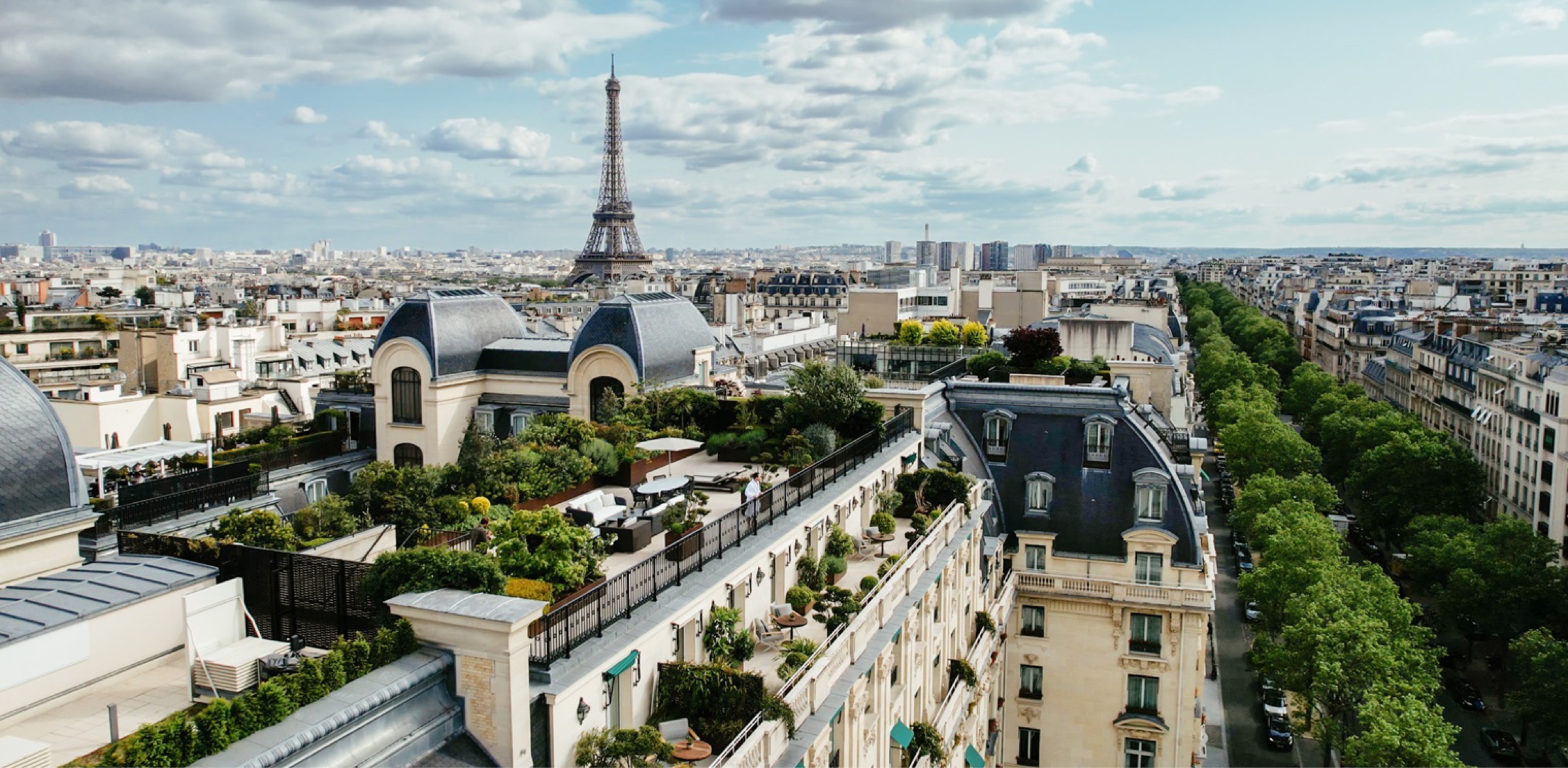
The Peninsula Paris, set at 19 Avenue Kléber in the 16th arrondissement, belongs to that rare category. It stands close to the Arc de Triomphe, within reach of the museums, maisons and ceremonial avenues that define western Paris. Yet its importance is not simply geographical. This is a building in which Paris has repeatedly changed costume: aristocratic residence, grand hotel, political stage, cultural institution, diplomatic setting, and finally, contemporary palace.
Often described as a “little Versailles,” the building first entered Parisian hotel history as the Hôtel Majestic, opened in 1908. Over the course of the twentieth century, it became far more than a place of passage. It hosted artists, writers, political delegations and institutional histories that shaped both France and the wider world. George Gershwin composed part of An American in Paris here. The League of Nations took form here in 1919, in the aftermath of the First World War. UNESCO had its first headquarters in the building between 1946 and 1958. The Paris Peace Accords ending the Vietnam War were signed here in 1973.
For the discerning traveller, this matters. True luxury in Paris is rarely found in decorative excess alone. It is found in the ability to read the city through its deeper codes: architecture, diplomacy, art, cuisine, restoration, discretion and time. The Peninsula Paris offers precisely this form of legibility. It is a hotel, certainly, yet it is also a restored witness to the city’s diplomatic and cultural imagination.
The building’s rebirth in 2014 was therefore not a simple reopening. It was an act of restoration and interpretation. A century-old heritage structure was brought back into Parisian life through contemporary craftsmanship, technical precision and an understanding that the future of a historic hotel depends on more than preservation. It must learn how to live again.
This is where The Peninsula Paris becomes especially interesting. Its identity is held between two traditions: the formality of Parisian grandeur and the exacting hospitality culture of The Peninsula. The result is neither purely French nor overtly international. It is a dialogue between heritage and service, between Belle Époque proportion and Asian precision, between Paris as theatre and Paris as private rhythm.
Avenue Kléber gives the hotel its urban tone. Unlike the more theatrical axis of the Champs-Élysées, this part of the 16th arrondissement carries a restrained elegance. Embassies, private residences, institutional buildings and broad Haussmannian perspectives create a Paris of distance and composure. It is a neighbourhood that understands privacy. From here, the city opens in several directions: the Arc de Triomphe, the Seine, the Eiffel Tower, Avenue Montaigne, the Bois de Boulogne and the western cultural landscape that now includes the Fondation Louis Vuitton.
That connection to the Fondation Louis Vuitton is more than a practical privilege. It places the stay inside a wider Parisian conversation about art, patronage and architectural daring. Frank Gehry’s building, set at the edge of the Jardin d’Acclimatation in the Bois de Boulogne, was conceived as a vessel for culture. Its glass sails and shifting light form a contemporary counterpoint to the stone discipline of Avenue Kléber. To move between The Peninsula Paris and the Fondation Louis Vuitton is to move between two expressions of Parisian ambition: one rooted in the twentieth century’s political and social memory, the other in the twenty-first century’s cultural self-invention.
This is the Paris that sophisticated travellers increasingly seek. Not a city reduced to monuments, nor a sequence of restaurant reservations and luxury boutiques, but a living field of symbols. A palace hotel becomes meaningful when it offers a way into that field. The Peninsula Paris does so through its past, its position and its sensitivity to time.
Time, here, is not a small detail. The Peninsula’s own philosophy gives it unusual importance through Peninsula Time, a flexible arrival and departure concept that allows guests to shape the edges of the stay with far greater ease. In a city where a morning arrival or late evening departure can otherwise become a logistical inconvenience, this changes the emotional rhythm of travel. It gives back the first and last hours, which are often the most vulnerable moments of a journey.
The same idea appears in the hotel’s spatial language. Rooms and suites are among the most generous in Paris, with an emphasis on calm, technology, marble, couture-inspired tones and the sense of a private Parisian residence rather than a transient interior. Yet the deeper luxury is not only size. It is the possibility of arriving in a historic building and feeling that it has been prepared for contemporary life without losing the weight of its past.
Dining also participates in the narrative. Parisian palace hotels have always understood that gastronomy is a form of cultural authorship. At The Peninsula Paris, dining is not merely part of the stay; it is one of the ways the building performs its renewed identity. The city is read through its table, its views, its rituals of breakfast, evening, conversation and pause.
This is why the hotel suits a certain kind of traveller. It is not designed for those who measure Paris only by proximity to landmarks. It is for those who want an address with a biography. Those who understand that a building can carry the memory of treaties, orchestral composition, institutional life and restoration. Those who value the quiet authority of being in the right part of the city, at the right tempo, with access shaped around cultural intelligence rather than generic sightseeing.
The current invitation, More Paris. Reserved for You, captures this spirit well when approached with discretion. Daily American breakfast, a guaranteed room upgrade, a welcome amenity, 10% savings on accommodation, Peninsula Time and two Premium tickets to the Fondation Louis Vuitton are not simply privileges attached to a stay. Together, they frame a Parisian interlude around time, comfort, culture and access.
The most compelling journeys in Paris are rarely those that try to do everything. They are those that understand sequence: arrival, rest, a museum, a view, a private dinner, a morning without urgency, a return through the avenues at dusk. The Peninsula Paris offers that sequence with unusual fluency.
For Exclusive Elite Travel clients, this is best approached as a cultivated Paris stay shaped around memory, cultural access, gastronomy, private rhythm and the western elegance of the city.
The right Paris begins with understanding what the city should reveal.