

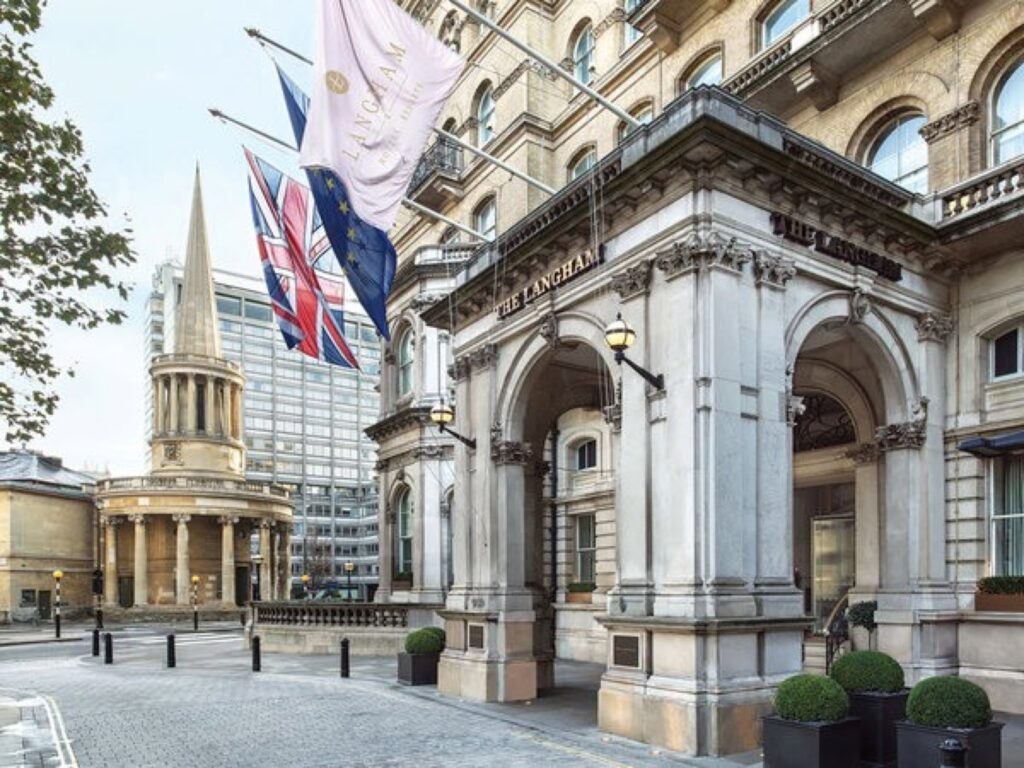
There are hotels that follow a city’s history, and there are hotels that help write it. The Langham, London belongs unmistakably to the second category.
Opened in 1865, on Portland Place, at the edge of Marylebone and moments from Regent Street, The Langham was not merely another distinguished London address. It was conceived as Europe’s first Grand Hotel, a new idea of hospitality at scale, where engineering, society, privacy and ceremony converged under one roof. Its construction, between 1863 and 1865, cost approximately £300,000, an extraordinary investment for the period and one of the most ambitious hotel projects of its age.
The opening was attended by the Prince of Wales, later King Edward VII, together with members of the British aristocracy, diplomats, politicians and leading cultural figures of the Victorian era. From the beginning, The Langham was not simply a place to stay. It was a stage on which modern luxury hospitality began to define itself.
At the time, the hotel represented a remarkable technological leap. Hydraulic lifts, a rare abundance of bathrooms and private washrooms, modern ventilation, early forms of air-conditioning and electric lighting introduced in its early years placed The Langham at the forefront of comfort and innovation. In the 19th century, these were not amenities. They were declarations of progress.
More than 160 years later, the hotel’s significance lies in its ability to preserve that original confidence without becoming trapped by nostalgia. The Langham, London now holds Two Michelin Keys 2025, recognition in the Condé Nast Traveller 2025 Reader’s Choice Awards, EarthCheck Master Certification 2025 and a Tripadvisor Travellers’ Choice Award 2024. These distinctions matter not as decoration, but as evidence of a rare continuity: heritage maintained with relevance.
A London Address with Cultural Weight
The Langham’s guest history reads less like a hotel register than a cultural index. Oscar Wilde, Mark Twain, Winston Churchill, Charles de Gaulle, Princess Diana, Frank Sinatra, Elizabeth Taylor, Lady Gaga, Daniel Craig, Ariana Grande and Bruce Springsteen are among those associated with the hotel over the decades.
Yet the more interesting point is not celebrity. It is what the hotel has represented to successive generations: a discreet centre of gravity in a city that constantly reinvents itself.
Its location is unusually precise. Within walking distance are Hyde Park, Regent Street, Buckingham Palace, the National Gallery and, further across the city’s cultural map, Tate Modern. Around it, Marylebone Village brings a cultivated residential elegance; Bond Street offers the ritual of high jewellery and couture; Oxford Street brings the democratic pulse of London commerce. The Langham sits between these worlds without surrendering entirely to any of them.
For the discerning traveller, that balance is important. It allows London to be experienced not as a checklist, but as a layered city: artistic, royal, literary, commercial, private.

Palm Court and the Social Architecture of Afternoon Tea
Few rituals are more associated with The Langham than afternoon tea. Served in Palm Court, it is one of the most renowned tea ceremonies in the world and part of the hotel’s foundational mythology.
When The Langham opened in 1865, afternoon tea moved from private aristocratic drawing rooms into a luxurious hotel setting, helping shape the modern form of the ritual. Palm Court remains the symbolic heart of that transformation: a public room with private codes, a social ceremony dressed in restraint.
From 22 June to 2 August, guests may experience The Strawberry Season Afternoon Tea, a limited-edition summer interpretation featuring seasonal desserts, homemade strawberry ice cream and sorbet, and summer-inspired aperitifs. It is a small but telling example of The Langham’s talent for continuity: tradition is not frozen; it is recast, season by season.
Rooms, Suites and the Language of Quiet Luxury
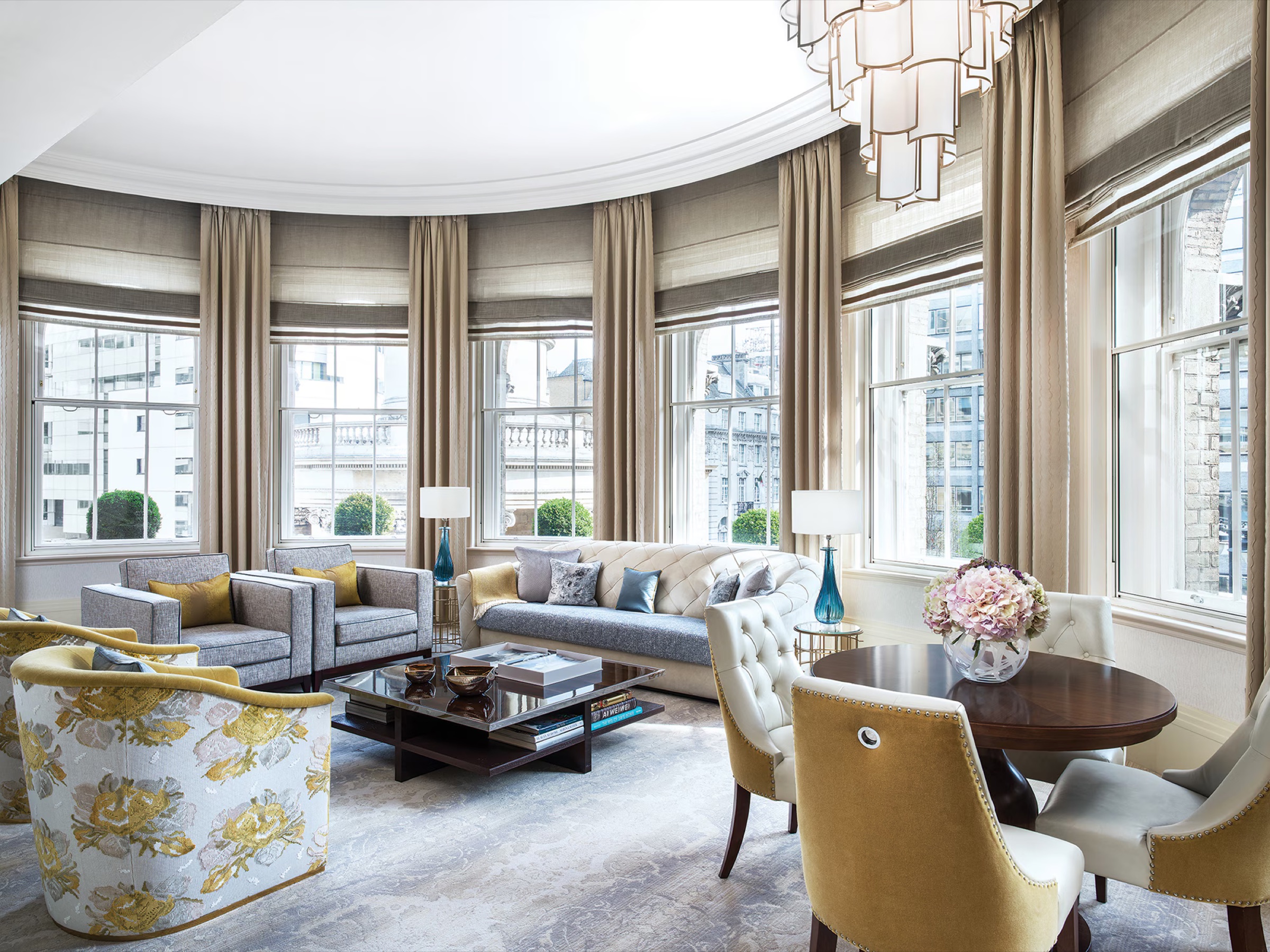
The rooms and suites at The Langham are less about theatrical opulence than about composure. Interiors are designed in a calm, aristocratic palette, with marble bathrooms and views over either the London skyline or a more discreet inner courtyard. It is a form of luxury that does not need to announce itself.
For guests in Executive Rooms or Suites, The Langham Club introduces a more private rhythm: breakfast, afternoon tea, evening canapés and champagne, personalised service and private check-in. In a city where time is constantly fragmented, this level of managed calm becomes one of the hotel’s most valuable privileges.
At the highest level, The Sterling Suite is the hotel’s grand residential expression. Spanning approximately 450 square metres, it can feature up to six bedrooms, a separate dining room, living area and media space, with 24-hour private butler service and access to The Langham Club. It is less a suite than a private London residence within the architecture of a Grand Hotel.
Chuan Spa: Wellness Through the Five Elements
The Langham’s wellness proposition is more serious than might be expected from a historic city hotel. Chuan Body + Soul is guided by Traditional Chinese Medicine and the Five Elements theory: Wood, Fire, Earth, Metal and Water. Before treatments, guests complete a short wellness questionnaire designed to identify elemental balance and inform the most appropriate treatment approach.
This detail matters. It prevents the spa from becoming a generic urban wellness facility. Instead, Chuan Spa offers a structured philosophy, using the language of balance, restoration and energetic alignment.
Treatments include Chuan Harmony Massage, a signature massage combining acupressure and relaxation techniques; Chuan Yu Signature Facial, incorporating ancient Gua Sha techniques; Platinum HydraFacial; Awakening Moon Ritual; bespoke body wraps, scrubs and wellness rituals; acupuncture; Tuina therapeutic massage; and Chinese cupping therapy.
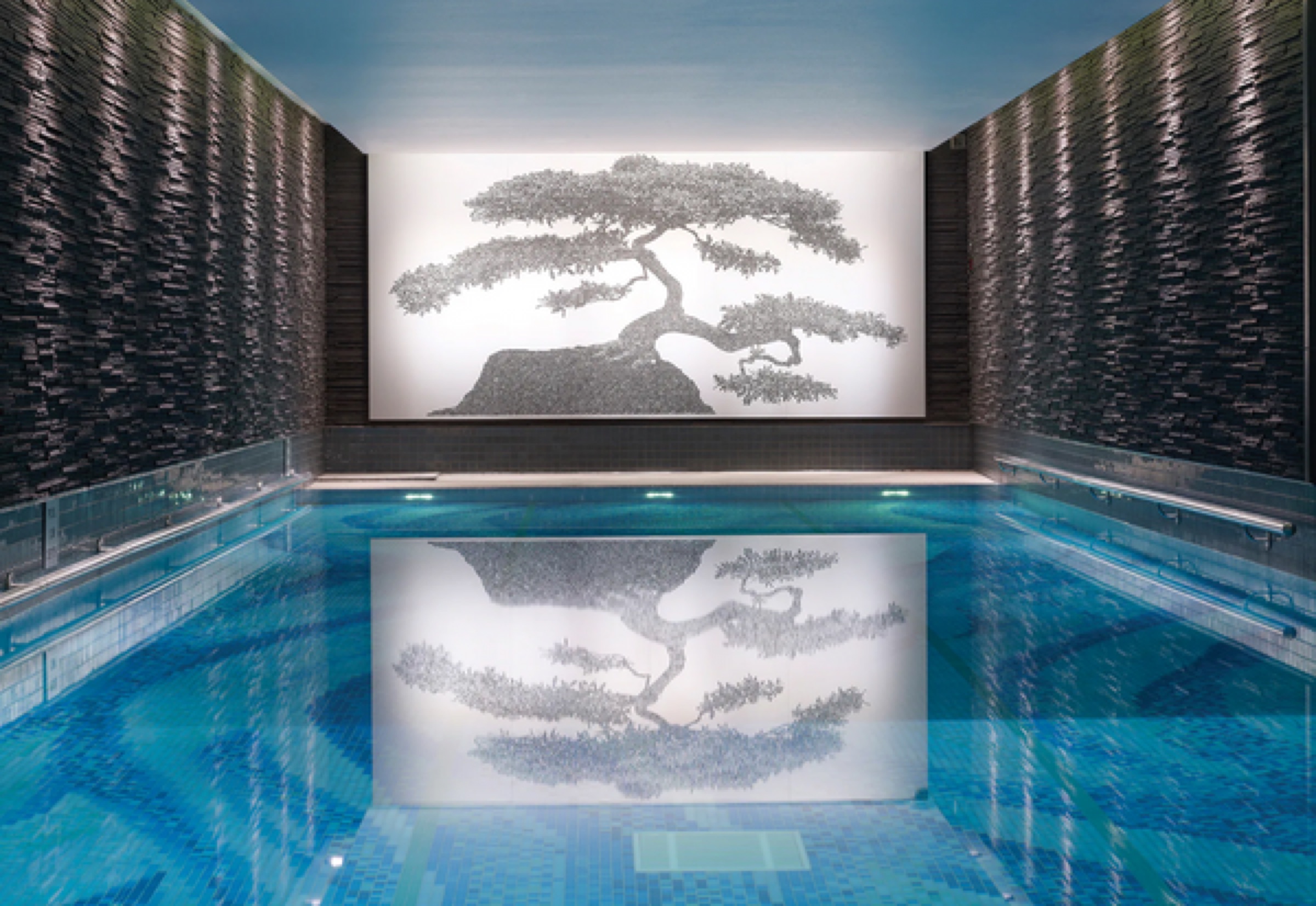
The facilities extend the sense of ritual: a 16-metre indoor swimming pool set within a former bank vault, sauna, steam rooms, a Contemplation Lounge serving seasonal teas aligned with the Five Elements philosophy, and a modern fitness studio. The symbolism is subtle but powerful, restoration placed inside the architecture of old London authority.
For a traveller arriving after long-haul flights, negotiations, performances, ceremonies or a demanding public schedule, Chuan Spa offers more than recovery. It offers recalibration within the city itself.
Culinary London, Reframed
The Langham has always understood the social importance of dining. Charles Dickens noted in his London guide that a stay at The Langham, including breakfast and dinner, cost 14 shillings and 6 pence, making it one of the most expensive hotel dining experiences in London at the time. Grand dinners and banquets helped define the hotel’s early prestige.
Literary history adds another layer. Sir Arthur Conan Doyle wrote during his stays, and a dinner at The Langham in 1889, later described by Doyle as a “golden evening”, is said to have inspired both The Sign of the Four and The Picture of Dorian Gray.
Today, the hotel’s culinary landscape remains diverse and culturally anchored. Sale e Pepe Mare brings Italian Riviera elegance and seafood tradition to London. The Wigmore, set in a former banking hall, offers a modern British pub experience with dishes curated by Michel Roux. Artesian, named after the original 117-metre-deep artesian well beneath the hotel, is one of London’s most iconic cocktail bars and a four-time winner of The World’s 50 Best Bars award. Sauce by The Langham, the hotel’s culinary school, invites guests into the craft behind the dining experience.
This is not dining as a list of venues. It is London hospitality as a social language: ceremony, appetite, wit, reputation and craft.
The Weekend as a Curated City Stay
The Langham is particularly compelling for a highly considered London weekend. Through the Resort in the City package, guests may access a programme of experiences that gives the stay more texture: The Langham History Tour, Artesian Cocktail Tasting, English Sparkling Wine Tasting, The Langham Bootcamp at Chuan Spa, a self-guided bike tour designed by the concierge team, Wigmore Beer Tasting and family pool time for guests travelling with children.
These experiences work because they interpret the hotel rather than merely entertain. They offer history, movement, taste, architecture and urban rhythm, the essential components of a meaningful city escape.
Why The Langham Still Matters
For a sophisticated traveller, The Langham, London matters because it occupies a rare position. It is not the newest address, nor the most visually radical, nor the loudest expression of contemporary luxury. Its authority is deeper. It is a hotel that helped invent the modern grammar of grand hospitality and still knows how to speak it fluently.
The Langham is best understood as a London institution with a private intelligence: close to the city’s cultural and commercial energy, yet rooted in ritual; historically grand, yet capable of quietness; elegant, but never emptied of meaning.
A stay here should be composed with care, the right room or suite, the right rhythm between history and wellness, the right table, the right afternoon tea, the right moment to retreat from the city without leaving it.
For travellers considering London through the lens of heritage, discretion and cultural continuity, The Langham deserves a conversation before it becomes an itinerary.