

For decades, Mykonos has occupied an unusual position within the Mediterranean imagination. It is at once ancient and performative, sacred and hedonistic, deeply Greek yet unmistakably international. Few islands have undergone such a visible transformation, from modest Cycladic fishing community to one of the world’s most recognisable summer stages. And yet, beneath the choreography of beach clubs, yachts and nightlife, another Mykonos has always existed: austere, wind-shaped, almost monastic in its elemental beauty.
The arrival of Fouquet’s Mykonos on Paraga Beach in June 2026 signals a subtle but important shift in how the island is once again being interpreted for a sophisticated audience. Not louder, larger or more ostentatious, but quieter, more architectural, more attuned to the cultural language of the Cyclades themselves.
This distinction matters.
For the discerning traveller, luxury in the Aegean has increasingly become less about spectacle and more about calibration: understanding where privacy still exists, where design remains connected to geography, and where hospitality respects the emotional cadence of an island rather than imposing upon it. Fouquet’s enters Mykonos at precisely this moment of reconsideration.
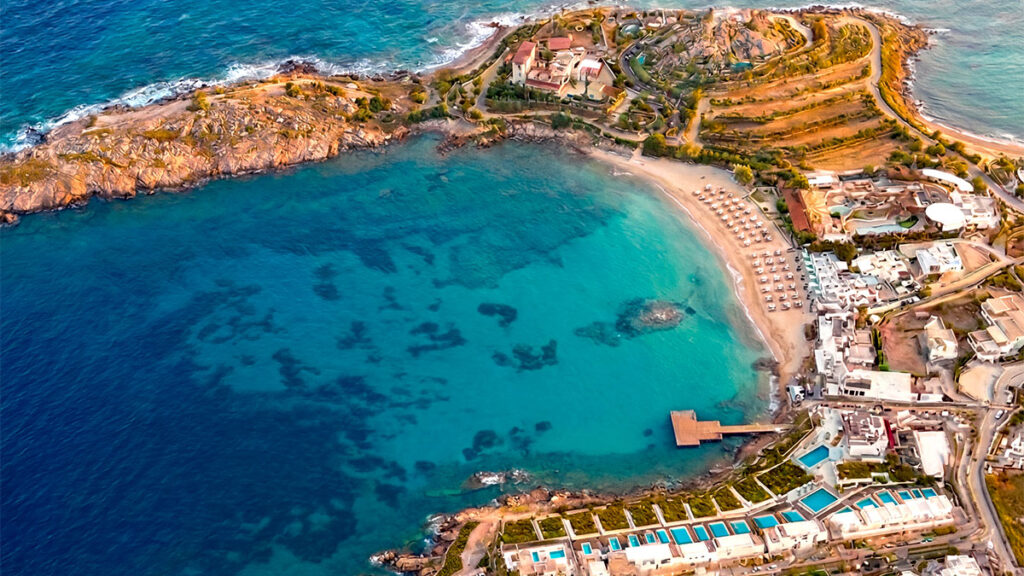
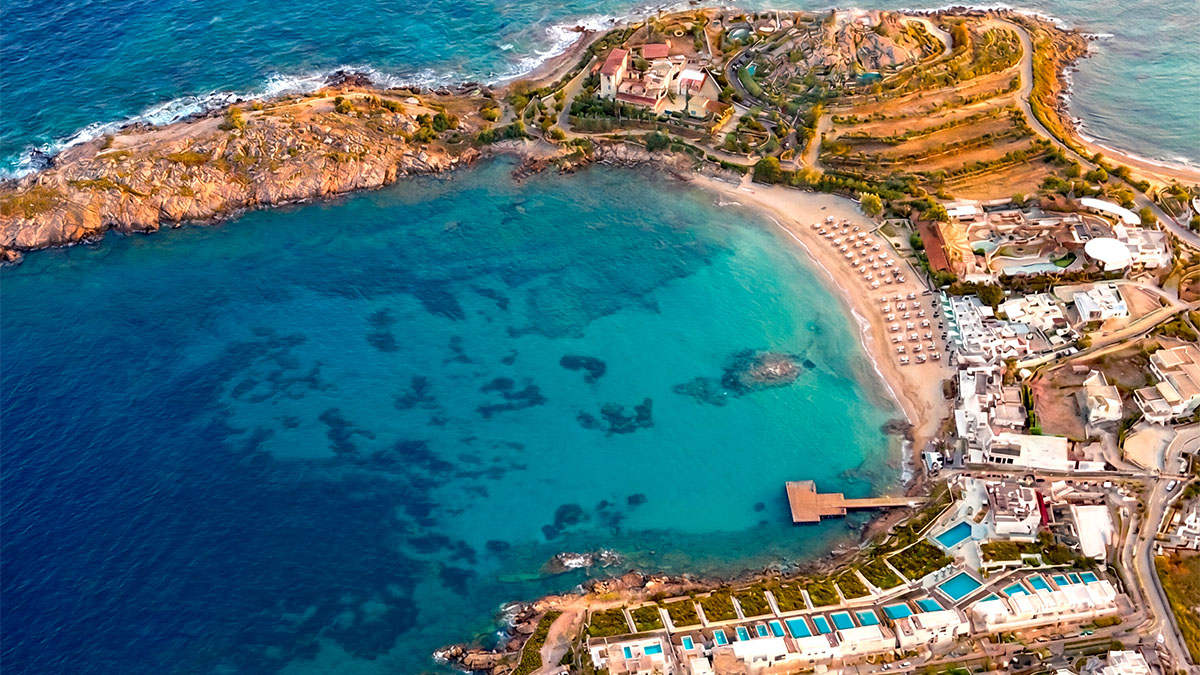
The symbolism of the property begins with its setting. Positioned between Paraga and Paradise Beach, two names synonymous with the island’s global mythology, the hotel occupies terrain that could easily have succumbed to excess. Instead, its architectural direction draws from the restraint of Cycladic tradition: low-slung forms, whitewashed surfaces, stone textures and structures seemingly carved by light itself.
Cycladic architecture has long been misunderstood internationally as merely aesthetic minimalism. In reality, it is environmental intelligence refined over centuries. The thick walls, rounded edges and cubic silhouettes emerged not from design trends but from necessity: protection against heat, wind and salt air. Villages across Mykonos, Tinos and Paros evolved almost organically from the landscape, creating settlements that appear less built than settled into place.
Fouquet’s Mykonos appears conscious of this inheritance. Rather than competing with the terrain, the resort recedes into it. Terraces open toward the horizon without theatricality; private pools reflect the muted blues and mineral tones of the island rather than interrupting them. The effect is not performative luxury but spatial calm, increasingly rare on an island often associated with perpetual visibility.
That restraint also reflects a broader evolution within Mediterranean hospitality. The contemporary luxury traveller is no longer simply searching for exclusivity in the conventional sense. Access alone has become insufficient. What matters now is context: understanding why a place exists, what cultural lineage it draws from, and whether it contributes meaningfully to its surroundings.
This is where the Fouquet’s name introduces another layer of narrative.
Historically associated with Parisian society and the discreet rituals of French cultural life, Fouquet’s carries with it an identity rooted less in hospitality than in atmosphere. The original Fouquet’s on the Champs-Élysées occupied a singular place within French intellectual and cinematic culture for over a century, a meeting point of artists, politicians and actors, where elegance derived from continuity rather than novelty.
Transposed to Mykonos, that legacy becomes unexpectedly compelling. The dialogue between Parisian refinement and Cycladic simplicity could easily feel artificial. Instead, it mirrors a longer Mediterranean tradition of cultural migration and exchange. Since the 1950s and 60s, the Greek islands have drawn an international artistic set precisely because they represented a form of liberation from urban European life. Writers, collectors, architects and filmmakers arrived seeking elemental clarity: harsh sunlight, stripped landscapes, slower rhythms.
Mykonos itself became central to this narrative during the post-war decades. Before the superyachts and global nightlife economy, the island attracted bohemian travellers and intellectual circles fascinated by Delos, the nearby sacred island believed in Greek mythology to be the birthplace of Apollo and Artemis. Delos transformed the surrounding waters into more than a leisure destination; they became part of a civilisational landscape where mythology, trade and spirituality once converged.
To stay meaningfully in Mykonos today requires some awareness of this deeper geography. Without it, the island risks becoming interchangeable with any number of luxury coastal destinations. Fouquet’s appears to understand that contemporary sophistication lies not in escaping place, but in reconnecting guests to it with greater subtlety.
Its positioning on Paraga Beach is particularly resonant in this regard. While the neighbouring bays carry decades of cultural mythology attached to nightlife and freedom, Paraga itself retains moments of visual serenity, especially outside the high summer crescendo. The contours of the coastline, the granite formations and the persistent Aegean winds preserve something elemental. Here, the island still reveals its older identity: maritime, sparse and exposed.
This matters because Mykonos is increasingly confronting the tensions of its own success. Across the Mediterranean, travellers are becoming more conscious of overtourism, environmental fragility and the homogenisation of luxury experiences. The future of places like Mykonos may depend less on expansion than on restoration, restoring intimacy, restoring architectural integrity, restoring a sense of emotional scale.
In that context, the emergence of more discreet, design-conscious retreats reflects a broader cultural correction. Fouquet’s Mykonos is not attempting to redefine the island entirely; rather, it participates in a quieter reframing of what contemporary Aegean luxury can mean.
The hotel’s 60 suites and three private villas speak to this shift toward lower-density hospitality. Space is treated not as spectacle but as insulation from the island’s intensity. Panoramic terraces and secluded coves are not presented as visual theatre alone, but as opportunities for stillness, a luxury increasingly difficult to secure in globally visible destinations.
There is also something symbolically significant about opening a property of this nature now. The post-pandemic traveller, particularly within the upper tiers of global mobility, has become more intentional. Journeys are expected to deliver emotional and intellectual texture alongside comfort. The most compelling destinations today are those capable of balancing discretion with cultural relevance.
Mykonos remains one of the few places capable of holding these contradictions simultaneously. It can still offer glamour, but also silence. Exposure, but also retreat. Ancient mythology alongside contemporary reinvention.
Fouquet’s Mykonos enters the island narrative not as an interruption, but as part of an ongoing negotiation between preservation and modernity, between the social mythology of Mykonos and the quieter Aegean spirit that preceded it.
For travellers who already know the island well, this distinction may prove particularly meaningful. Not because the hotel attempts to escape Mykonos, but because it engages with a more nuanced version of it.
And perhaps that is the new Mediterranean luxury: not simply arriving somewhere exceptional, but understanding which version of that place still deserves to be experienced.
For those considering how Mykonos might be approached differently, with greater privacy, cultural perspective and architectural sensitivity, the conversation is increasingly becoming less about where to stay, and more about how one wishes to encounter the island itself.