


Penguins are some of the most beloved and fascinating seabirds, thanks to their playful behavior, goofy gait and incredible adaptations to extreme environments. Although often associated with Antarctic ice, penguins can also be found in warmer areas such as the coasts of South America and South Africa.
If you want to see penguins in their natural habitat, we offer you the best trips to see these amazing birds in the wild!
Why go on a trip to see penguins?
1. A once-in-a-lifetime experience – Seeing these birds in their natural environment is much more special than at the zoo. You can observe how they swim, interact and raise their chicks.
2. Spectacular scenery – Antarctica, the Galápagos Islands, Patagonia, or South Africa’s Boulders Island offer incredible views, from huge glaciers to exotic beaches.
3. Unforgettable photos – Whether they’re on the ice, in the water, or chaotically strolling along the shore, these birds provide the perfect moments for spectacular photographs.
4. Help protect them – Many tours are organized with an ecological purpose, and responsible tourism helps protect their habitat.
5. An educational trip – You’ll learn fascinating facts about their behavior, environmental adaptations, and the dangers they face.
Incredible curiosities: What didn’t you know?
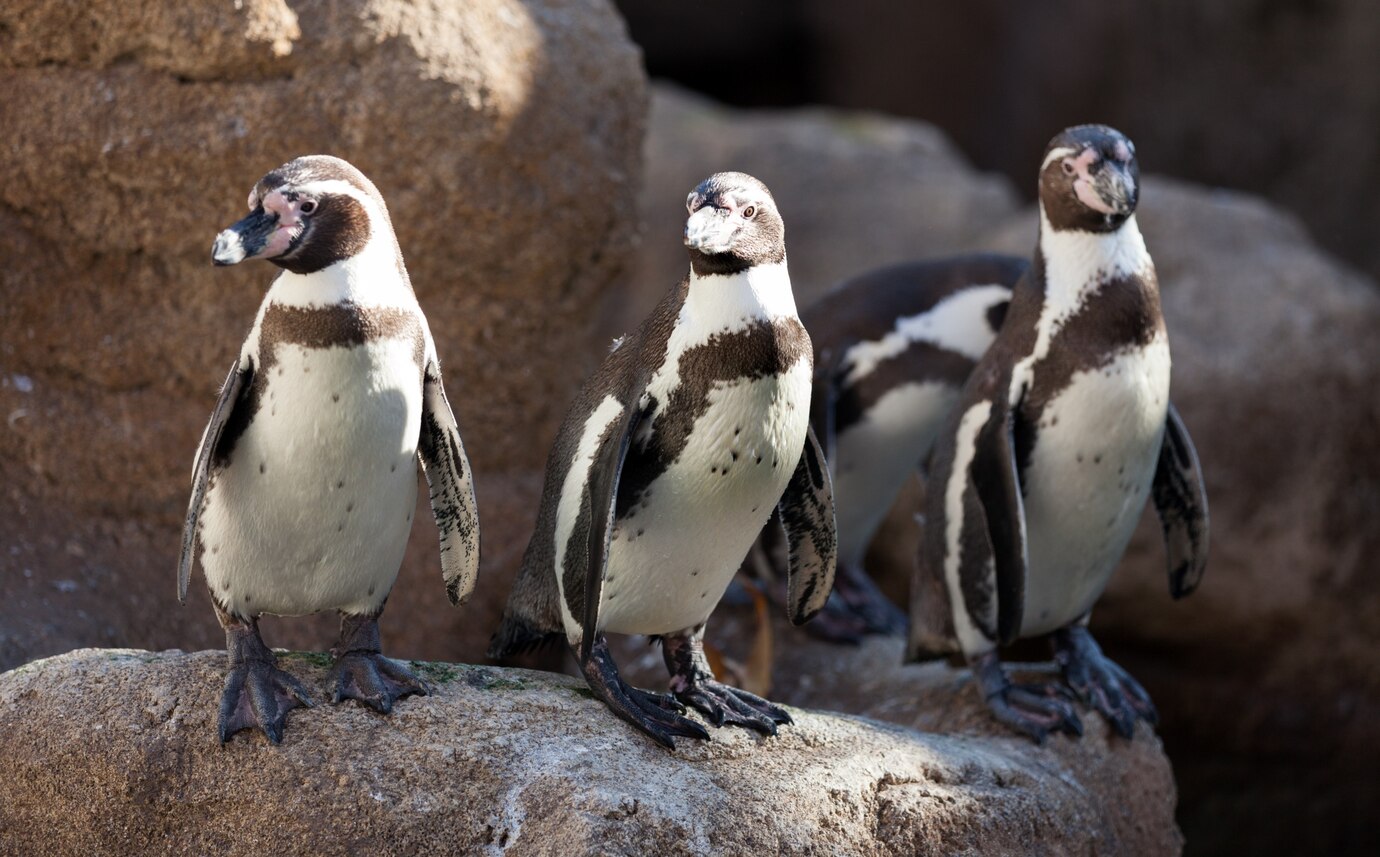
1 . They are excellent swimmers
Although unable to fly, these birds are champion swimmers, using their wings-turned-swaders to move through the water. The fastest species is the Gentoo, which can reach speeds of up to 36km/h.
2. They can drink salt water
These birds have special glands near their eyes that remove salt from seawater, allowing them to survive in environments where fresh water is scarce.
3. Imperials are the best divers
Studies show that imperial penguins can dive to depths of more than 500 meters and stay underwater for up to 27 minutes.
4. Biggest and smallest
– The largest is the imperial penguin, which can grow up to 1.2 meters tall and weigh up to 40 kg.
– The smallest is the little blue penguin, which is just 30 cm tall and weighs about 1 kg.
Interesting facts about their life
– Penguins are very loyal – Most species find a lifelong mate and renew their bond year after year with special dances.
– They build nests out of stones – Adélie penguins are known to use pebbles to build their nests, and males offer stones to females as a romantic gesture.
– They have a thick layer of blubber – Penguins that live in cold climates, such as the Imperials, have a thick layer of blubber under their skin to withstand temperatures as low as -60°C.
Did you know?
– Penguins can distinguish faces and recognize their mate by specific sounds? Each penguin has a unique “call”.
– The largest group of birds has been recorded in South Georgia, where over 2 million king penguins have been counted?
– These seabirds are very social – you’ll rarely see them alone, preferring to live in colonies of thousands or even millions.
Frequently asked questions about seabirds
1. Where do these Antarctic birds live?
They are found only in the southern hemisphere, from Antarctica to the warmer regions of South America, Africa and Oceania.
2. How many penguin species are there?
Depending on the classification used by researchers, there are between 17 and 19 species.
3. How do penguins breed?
These birds form pairs during the mating season, and males often give gifts (stones or sticks) to females. Eggs are hatched by both parents, and chicks are fed by regurgitating food.
4. Why are there no penguins at the North Pole?
Penguins are adapted to live in the southern hemisphere. At the North Pole, living conditions are different and predators such as polar bears would jeopardize their survival.
5. Where are most penguins found?
The largest penguin colony is on the South Georgia Islands, home to more than 2 million king penguins.
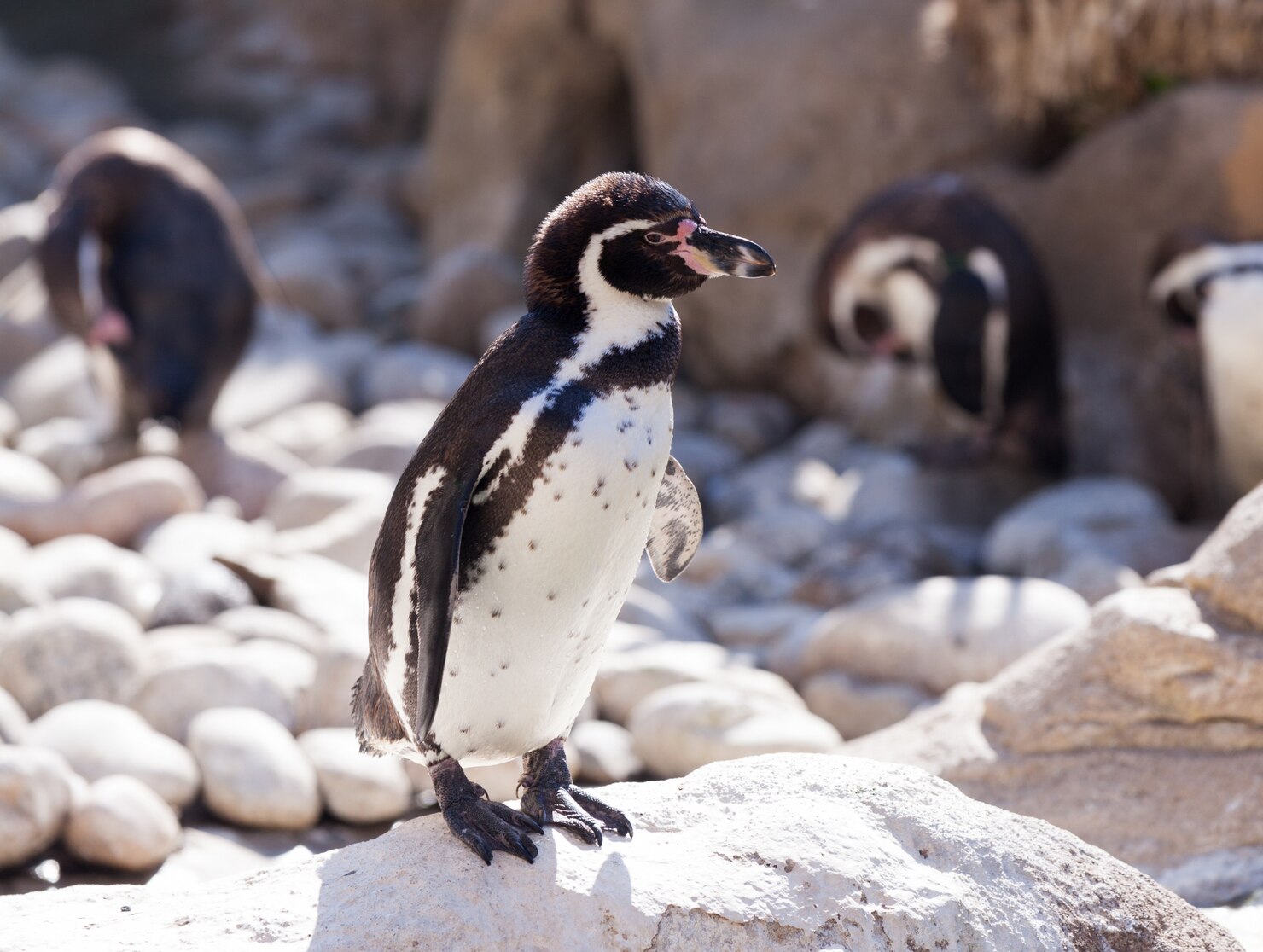
What do studies say about these seabirds?
– A study published in the journal Science shows that emperor penguins lost the ability to fly about 60 million years ago, instead developing an exceptional swimming ability.
– A 2023 WWF report estimates that populations of some Antarctic bird species are declining due to climate change. For example, Adelie penguins have suffered a 65% decline in recent decades due to ice loss.
– A study by the University of Washington shows that these seabirds are among the most adaptable of seabirds, able to withstand extreme temperature environments, from Antarctic ice sheets to the hot beaches of the Galápagos Islands.
If you dream of seeing penguins in their natural environment, we offer you spectacular trips to places where you can see these amazing birds.
📌 Discover the best Antarctica trip to see Antarctic birds!
Sources and References
– Emperor Penguin – National Geographic
– Gentoo Penguin – National Geographic
– Wikipedia – Penguin