


Wimbledon Championships 2026
The Wimbledon tennis tournament (The Championships, Wimbledon) is the oldest and most prestigious of the four Grand Slam tournaments (the top tournaments in the men’s tennis circuit, ATP, and women’s tennis circuit, WTA), being the only one of the four to be played on the same surface as when it began, grass. It is hosted by the All England Lawn Tennis and Croquet Club in London, United Kingdom. It is the third in order during the year, after the Australian Open and Roland Garros.
The tournament takes place over two weeks, at the end of June and beginning of July. The main arenas of the All England Lawn Tennis and Croquet Club complex are Centre Court, with a capacity of 15,000 seats, and Court No. 1, with approximately 11,000 seats. Since 2009, Centre Court has been equipped with a retractable roof and floodlights, allowing matches to be played in rain or extreme heat. The roof opens and closes in about 10 minutes. The Royal Box is located on the south side of the centre court.
Wimbledon is not only a celebration of tennis, but also a celebration of gastronomy. A wide range of food and drink is on offer, reflecting the rich history and heritage of the event and its unrivalled reputation. Whether you are looking for a quick snack between matches or a relaxed and more substantial lunch, there are numerous options, ranging from gourmet sandwiches and salads to seasonal dishes created by chefs in the Wimbledon kitchens.
The first edition took place in 1877, when only the men’s competition was played. The entry fee was one guinea and 22 players registered. The winner was Spencer Gore, a 27-year-old cricket player from Surrey. In the final, he defeated William Marshall in just 48 minutes in three sets, with a score of 6-1, 6-2, 6-4, receiving the prize of 12 guineas and a silver cup offered by the sports magazine The Field. The final was watched by about 200 people who paid a shilling each for admission. The final was played on a Thursday because a cricket match was scheduled to start the next day.
Starting in 1884, tennis tournaments for girls and men’s doubles were added. In 1913, the first women’s doubles and mixed doubles competitions took place. Until 1922, the winner of the tournament automatically qualified for the final of the next edition. In 1937, the first televised edition of the Championships took place. Like the other Grand Slam tournaments, Wimbledon was only for amateurs until 1968, when the Open Era in tennis began.
The winner of the men’s singles tournament receives a silver cup approximately 47 centimeters high and 19 centimeters in diameter. The trophy has been awarded since 1887 and bears the inscription “The All England Lawn Tennis Club Single Handed Champion of the World.” In the women’s competition, the winner receives a silver plate with a diameter of 48 centimeters, decorated with mythological figures. Other silver cups are awarded in the other competitions. The trophies are usually presented by the Duke of Kent, the President of the Club.
In 1968, professional players were also allowed to participate, and cash prizes began to be awarded. Until 2007, the prize fund was higher in the men’s competition than in the women’s, but since that year, the same prizes have been awarded to both boys and girls.

DRESS CODE ON THE CHAMPIONSHIP COURTS
Rules applicable to all clothing items, both during training and during matches
- Competitors must be dressed in appropriate tennis attire, which must be almost entirely white, from the moment the player enters the court area.
- The color of the clothing must be white, not off-white, beige, or cream.
- There must be no colored pieces or portions of material. A single colored stripe around the neckline or sleeve cuff is permitted, but it must not be wider than 1 centimeter.
- Colors contained in patterns will be measured as if they were a portion of color, and must comply with the maximum width of 1 centimeter. Logos consisting of variations in material or patterns are not permitted.
- The back of the shirt, dress, sweater, or top of the costume must be entirely white.
- Pants, skirts, or the bottom of the costume must be white, except for a single line of color at the bottom of the outer seam with a maximum width of 1 cm.
- Caps, headbands, bandanas, cuffs, and socks must be white, except for a single line of color with a maximum width of 1 cm.
- Footwear must be almost entirely white, including the sole, and must comply with the rules applicable to grass field shoes. Large manufacturer logos are not encouraged.
- Any undergarments that are visible or may become visible during play (including due to perspiration) must be white, except for a single line of color with a maximum width of 1 cm. In addition, standards of decency must always be observed.
- Medical equipment must be white if possible, but may be colored if absolutely necessary.
However, a more permissive dress code is allowed on the training courts at Aorangi Park.
COURTS & GROUNDS
The courts are owned by All England Lawn Tennis Ground plc and the entire site, including parking lots, covers over 42 acres with a capacity of 38,500 spectators.
- 18 grass courts for the tournament.
- 22 grass courts for training (reduced to 20 in 2018 due to the project to build a roof for Court No. 1)
- 8 American clay courts
- 5 indoor courts, 2 Greenset Velvelux and 3 Greenset Trophy
With the exception of the grass courts, the courts are used throughout the year by club members and certain players sponsored by the LTA. The grass courts can be played on from May to September (except for the center court and other show courts used only during the tournament). The courts are rented to certain clubs and organizations, especially national ones, for various events.
GRASS, LINES & MAINTENANCE
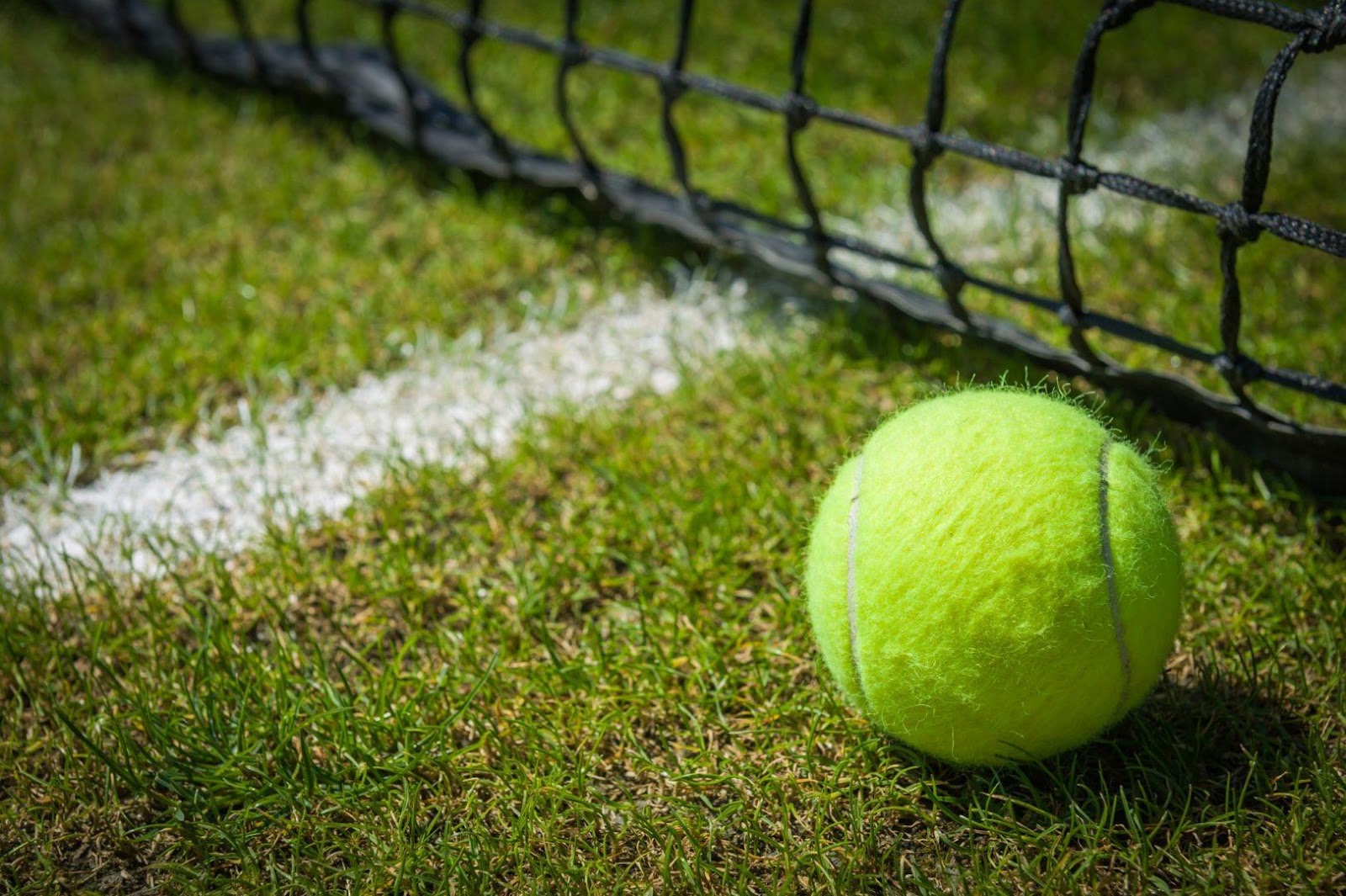
Research by experts has shown that cutting grass to a height of 8 mm (since 1995) is optimal for today’s game and for the survival of the grass.
The fields have been entirely seeded with Perennial Ryegrass since 2001 to improve durability and strength in order to better withstand the wear and tear of modern play.
The speed of play on the course is influenced by several factors, such as the overall compaction of the soil over time, as well as the weather before and during the event.
The ball will feel heavier and slower on a cold, gray day and lighter and faster on a warm, dry day.
The number of bounces of the ball is largely determined by the soil, not the grass.
The soil must be hard and dry to allow for 13 days of play without damaging the surface beneath the field.
There have been no changes to the ball specification since 1995, when the compression was changed very slightly.
Paint is not used to mark the lines, but rather a white substance containing titanium dioxide to make them more durable.
All lines are 50 mm wide, except for the baseline, which is 100 mm wide.
Court maintenance
- Nine tons of grass are planted each year.
- The courts are lined and maintained daily during the tournament.
- Court wear, surface hardness, and ball bounce are measured daily.
- All courts are renovated in September.

HEAT RULE & GASTRONOMY
Information about the heat rule imposed by the WTA, used at Grand Slam tournaments.
- The rule was introduced in 1992 and is applied to all WTA events throughout the year.
- Grand Slam tournaments adopted this rule on the recommendation of the WTA.
- It has been applied twice so far during the tournament, on July 23, 2006, and June 30, 2009.
- The heat rule allows for a 10-minute break between the second and third sets when the heat stress index is at least 30.1 degrees Celsius.
- The heat stress index is a measurement that takes into account air temperature, humidity, and ground temperature.
- This index is measured 30 minutes before the start of the match, at 2:00 p.m. and 5:00 p.m.
- It is sufficient for a single player participating in the match to request a break for the rule to apply.
- It only applies to women’s singles matches that have not yet started.
- If there are changes in the weather and the rule is lifted, matches that have already started will be completed with the rule applied.
- There is no similar rule for men in ATP tournaments.
At Wimbledon, however, there is also an emphasis on food and drink.
Dining is an integral part of a day at the tournament, and the organizers strive to offer high-quality, seasonal, sustainable, and responsibly sourced dishes, highlighting the best British produce.
Get into the spirit and book a table at The Wingfield (the only restaurant that takes reservations) with a view of the lively Tea Lawn near Centre Court, enjoy classic British specialities at dinner in the Conservatory Kitchen, or relax at The Baseline Grill. Last but not least, don’t miss the strawberries and cream and a glass of Pimm’s champagne!
You can enjoy a unique experience by booking a picnic!
A picnic on the lawn is the perfect way to enjoy an afternoon at Wimbledon. You can book a backpack for a premium picnic lunch for two.
WIMBLEDON TOURNAMENT 2026
WIMBLEDON TOURNAMENT 2026 – June 29 – July 12
We are pleased to offer you Centre Court & No.1 Court Debenture tickets for the 2026 Wimbledon Championships.
We can also offer pre-tennis hospitality at the Hotel du Vin – Cannizaro House. Please do not hesitate to contact us for details.
CENTRE COURT
| Day | Price per ticket in pairs | Single surcharge | 3 or 4 surcharge | 5 or 6 surcharge |
|---|---|---|---|---|
| Mon 29 June (1st Round matches) | £2994 | £120 | £300 | £420 |
| Tue 30 June (1st Round matches) | £2634 | £120 | £300 | £420 |
| Wed 1 July (2nd Round matches) | £2694 | £120 | £300 | £420 |
| Thu 2 July (2nd Round matches) | £2694 | £120 | £300 | £420 |
| Fri 3 July (3rd Round matches) | £3234 | £120 | £300 | £420 |
| Sat 4 July (3rd Round matches) | £2994 | £120 | £300 | £420 |
| Sun 5 July (4th Round matches) | £2994 | £120 | £300 | £420 |
| Mon 6 July (4th Round matches) | £3414 | £120 | £300 | £420 |
| Tue 7 July (1 x Men’s & 1 x Ladies Q-F) | £4014 | £180 | £360 | £540 |
| Wed 8 July (1 x Men’s & 1 x Ladies Q-F) | £4374 | £180 | £360 | £540 |
| Thu 9 July (Ladies S-F) | £2394 | £180 | £300 | £420 |
| Fri 10 July (Men’s S-F) | £8994 | £240 | £420 | £600 |
| Sat 11 July (Ladies Final) | £3114 | £180 | £300 | £420 |
| Sun 12 July (Men’s Final) | £10794 | £240 | £420 | £600 |
NO.1 COURT
| Day | Price per ticket in pairs | Single surcharge | 3 or 4 surcharge | 5 or 6 surcharge |
|---|---|---|---|---|
| Mon 29 June (1st Round matches) | £1794 | £120 | £240 | £360 |
| Tue 30 June (1st Round matches) | £1794 | £120 | £240 | £360 |
| Wed 1 July (2nd Round matches) | £1794 | £120 | £240 | £360 |
| Thu 2 July (2nd Round matches) | £1854 | £120 | £240 | £360 |
| Fri 3 July (3rd Round matches) | £1914 | £120 | £240 | £360 |
| Sat 4 July (3rd Round matches) | £1914 | £120 | £240 | £360 |
| Sun 5 July (4th Round matches) | £1854 | £120 | £240 | £360 |
| Mon 6 July (4th Round matches) | £1854 | £120 | £240 | £360 |
| Tue 7 July (1 x Men’s & 1 x Ladies Q-F) | £2274 | £180 | £360 | £480 |
| Wed 8 July (1 x Men’s & 1 x Ladies Q-F) | £2274 | £180 | £360 | £480 |
| Thu 9 July (Doubles) | £894 | £120 | £240 | £360 |
Prices are per ticket and based on pairs as standard. If you require a single ticket or groupings, please add the relevant surcharge to the pairs rate (applicable on each ticket).
If you have a request for a specific Gangway and/or Row, please contact us for a bespoke quote.


