

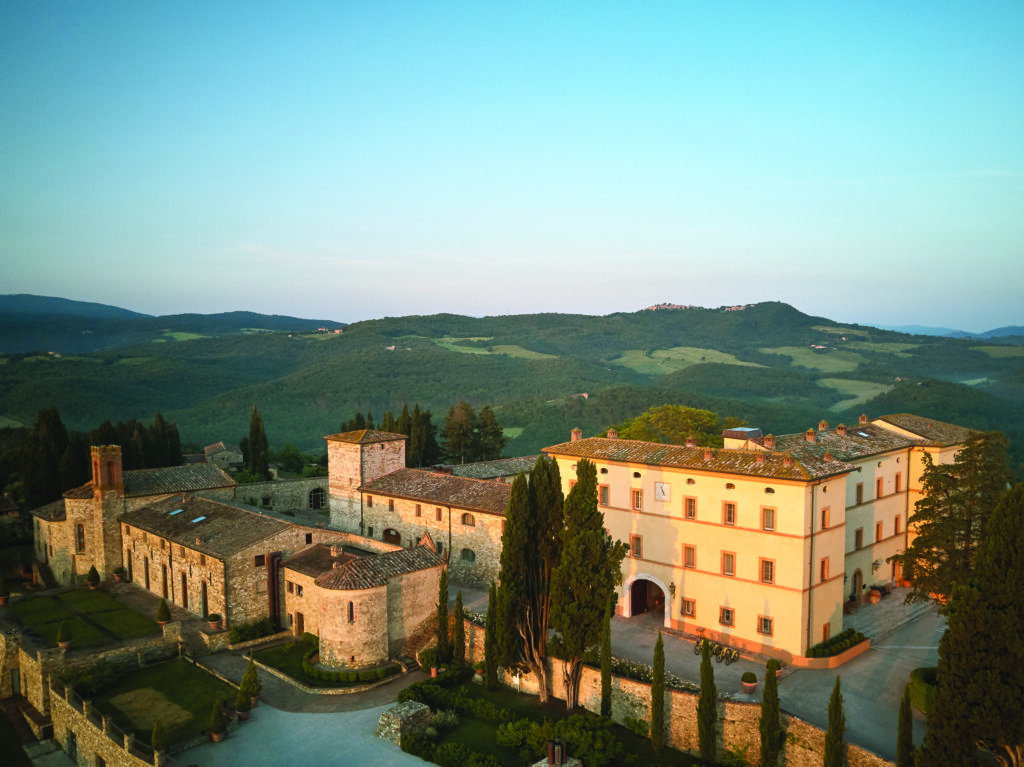
In Tuscany, time does not move in straight lines. It settles, accumulates, and resurfaces — layered into stone walls, cultivated fields, and the measured cadence of daily life. Belmond Castello di Casole exists within this deeper temporal logic. It is not simply a restored castle in the Tuscan countryside, but a living palimpsest: Etruscan land, medieval stronghold, aristocratic estate, abandoned relic, and — now — a carefully stewarded expression of continuity.
For the discerning traveller, Casole is not about arrival. It is about inhabiting a landscape where history has never been abstracted into display, but remains embedded in use, labour, and silence.
An Etruscan Beginning, a Medieval Spine
The estate’s story begins long before the castle itself. Archaeological evidence places the land within the orbit of the Etruscans, whose settlements once traced the ridges and valleys of central Tuscany. This was a territory shaped by agriculture, astronomy, and ritual — an early understanding of land as both sustenance and symbol.
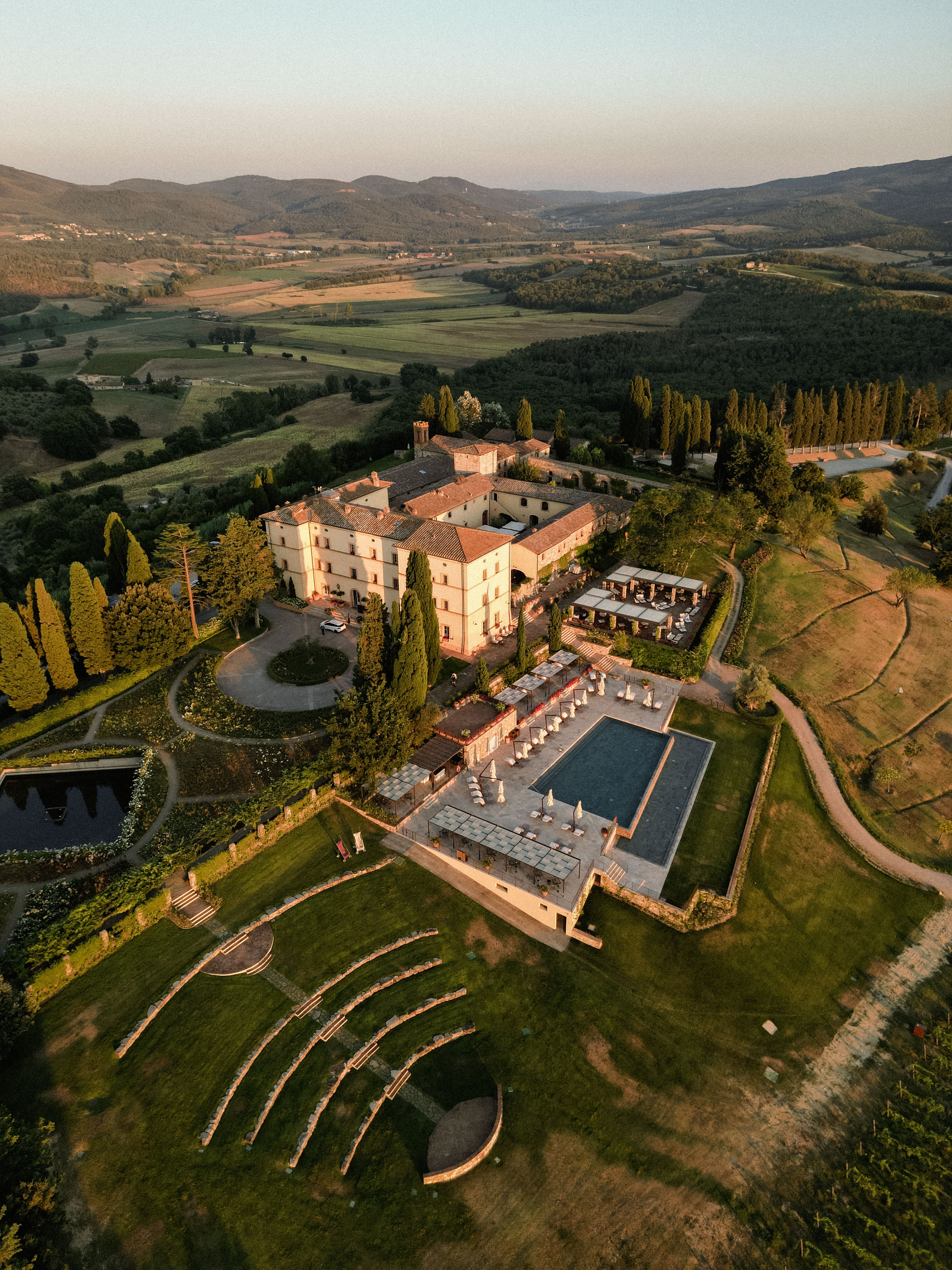
The castle that anchors the estate emerged in the 10th century, later fortified in the medieval period as Siena and Florence contested influence across the region. Its towers were not ornamental; they were instruments of survival, surveillance, and authority. From the upper reaches of the property, one still reads the logic of defence and dominion in the alignment of walls, the thickness of stone, the way the building commands the surrounding fields.
Yet Castello di Casole was never an isolated fortress. It functioned as the heart of a vast agricultural estate — a working organism where land, labour, and lineage were inseparable.
From Aristocratic Estate to Near Oblivion
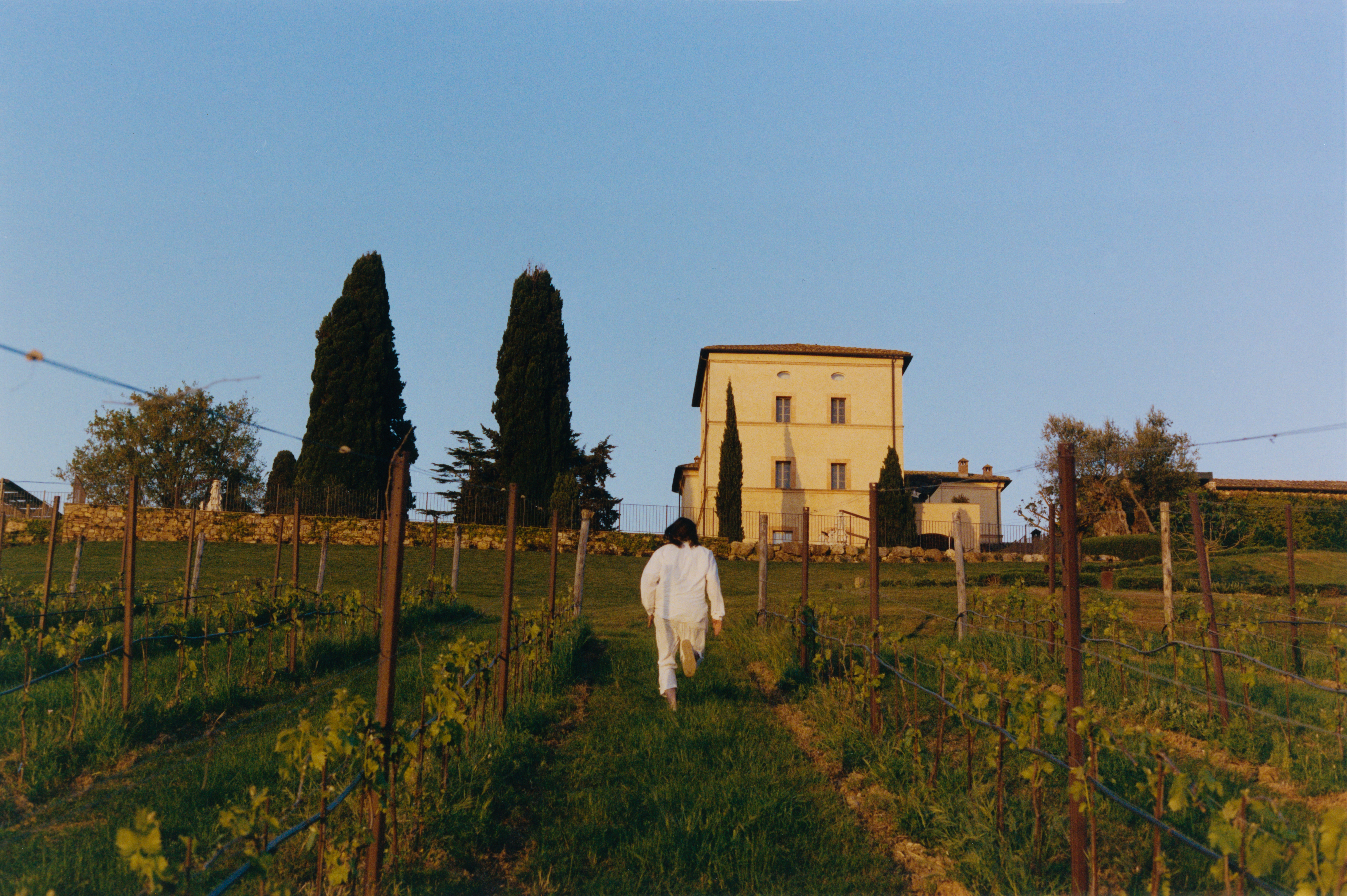
By the 18th and 19th centuries, Casole had transitioned into the hands of Tuscan nobility, evolving into a grand country estate. Villas, farmhouses, olive groves, and vineyards radiated outward, shaping what remains today one of the largest private estates in Tuscany.
Then came the 20th century — and with it, decline. Rural depopulation, shifting economies, and modernity’s pull toward cities left Casole suspended in time. Buildings deteriorated. Fields lay fallow. The estate became a ghost of its former coherence.
What followed was not a reinvention, but a rescue grounded in restraint. When Belmond undertook the restoration, the objective was not transformation through spectacle, but revival through fidelity. Stone was repaired, not replaced. Frescoes were stabilised, not reimagined. Agricultural practices were reintroduced with contemporary intelligence but historical respect.
The result is a rare phenomenon in hospitality: a place that feels neither frozen nor modernised, but resumed.
Architecture as Narrative, Not Design Statement
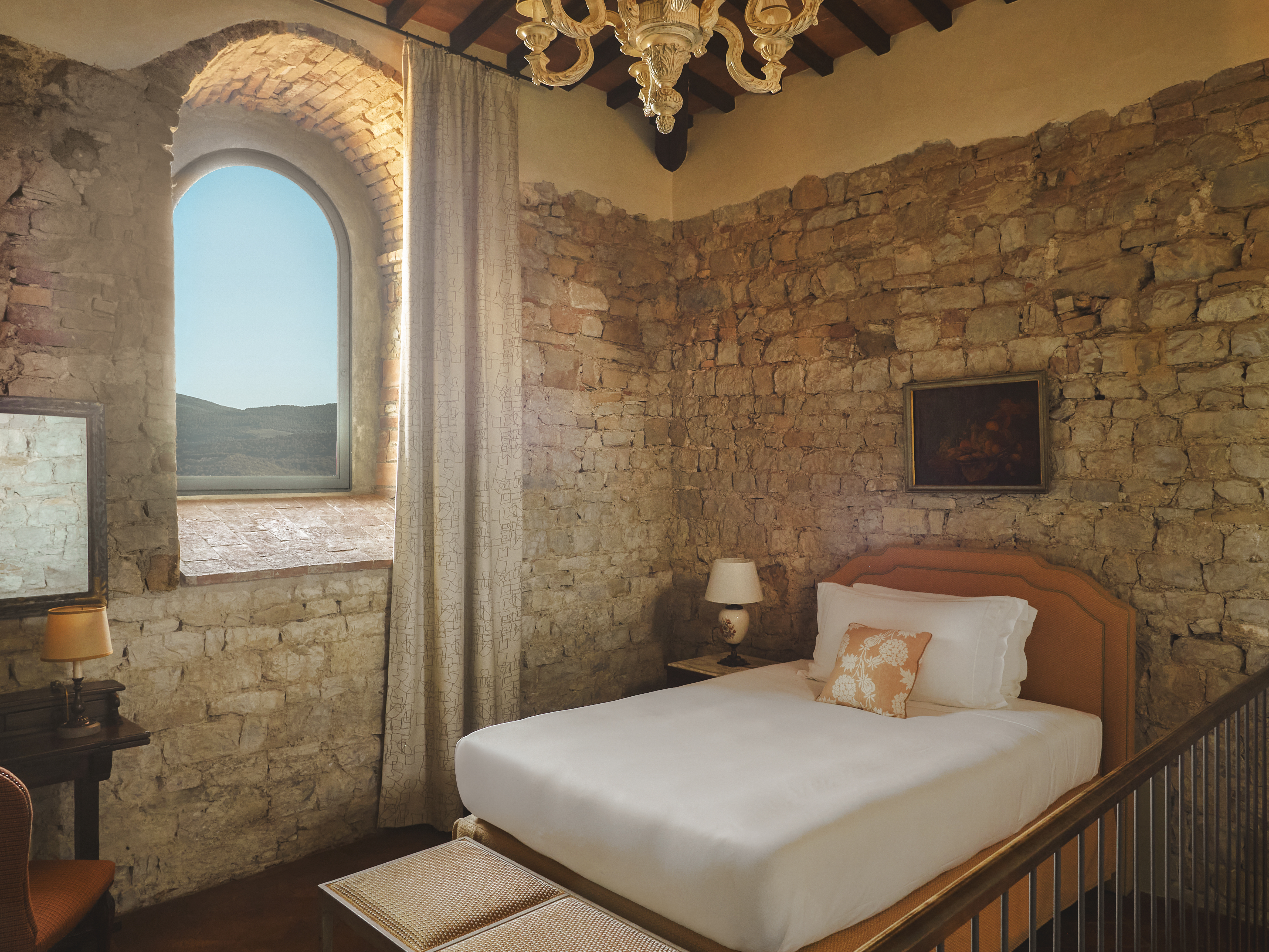
Castello di Casole does not announce itself through design bravado. Its power lies in proportion, texture, and patina. Rooms unfold within ancient walls, where irregularities are preserved and celebrated. Terracotta floors bear centuries of wear. Windows frame views that have remained largely unchanged since Renaissance painters first rendered this countryside canonical.
The architecture insists on awareness. Ceilings vary in height. Corridors bend unexpectedly. One is constantly reminded that this was not built for hospitality, but for living over centuries, by generations with no concept of guests.
This is where Casole diverges from many restored historic properties. It does not attempt to neutralise history for comfort. Instead, comfort is introduced quietly, almost deferentially, allowing the original structure to retain its authority.
The Estate as Cultural Ecosystem
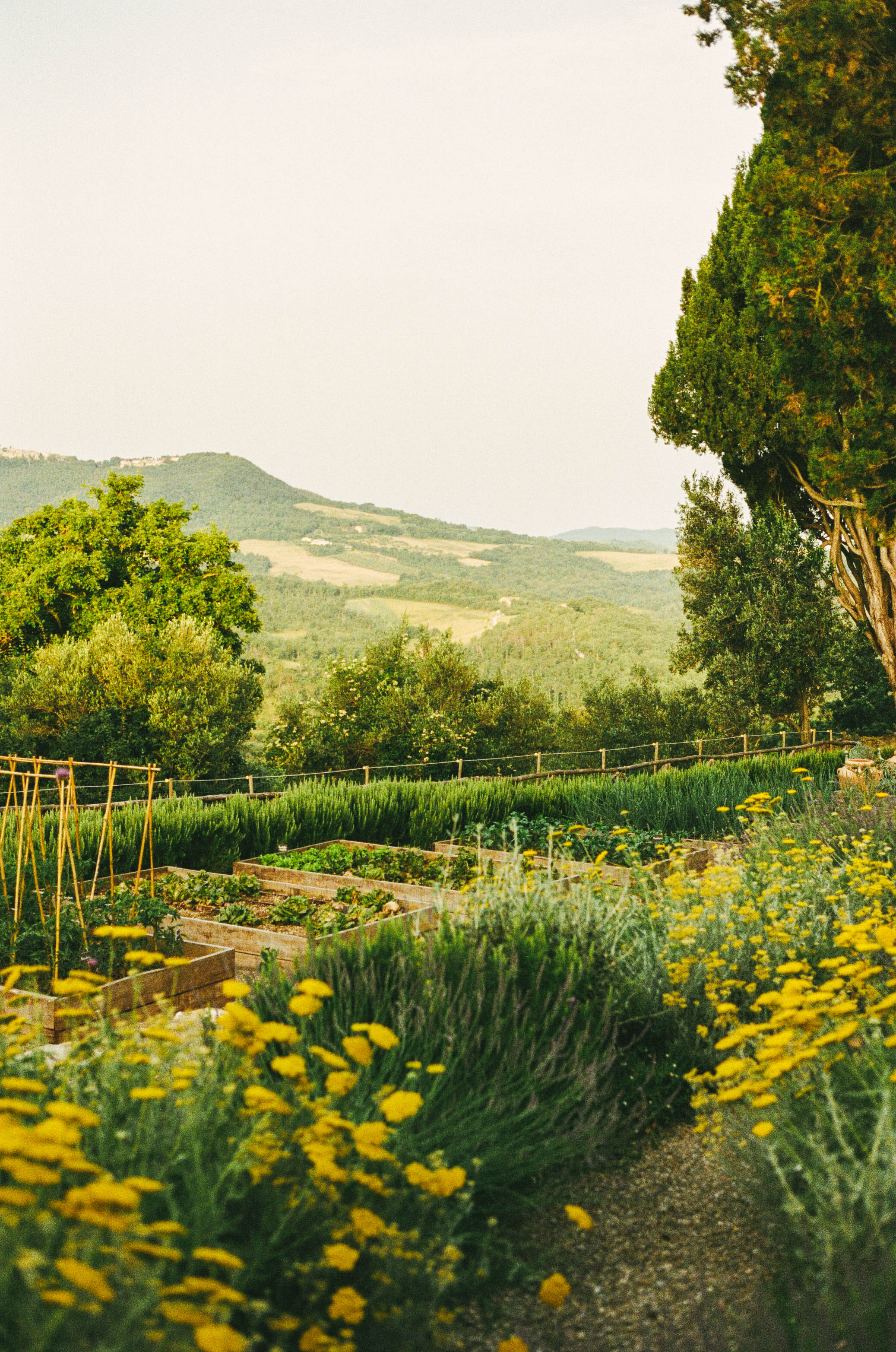
What truly distinguishes Castello di Casole is scale — not in terms of grandeur, but continuity. The estate spans thousands of acres, much of it protected, cultivated, or left deliberately wild. Olive oil, wine, honey, and herbs are produced on-site — not as lifestyle embellishments, but as a continuation of agricultural lineage.
Walking the estate is an exercise in perspective. You pass Roman ruins, medieval chapels, working farms, and uninterrupted woodland. There is no sense of curated route or prescribed experience. The land reveals itself slowly, on foot, through repetition.
For the discerning traveller, this matters. Casole offers not a snapshot of Tuscany, but an immersion into its working reality — one that resists compression into highlights.
Stillness as a Form of Access
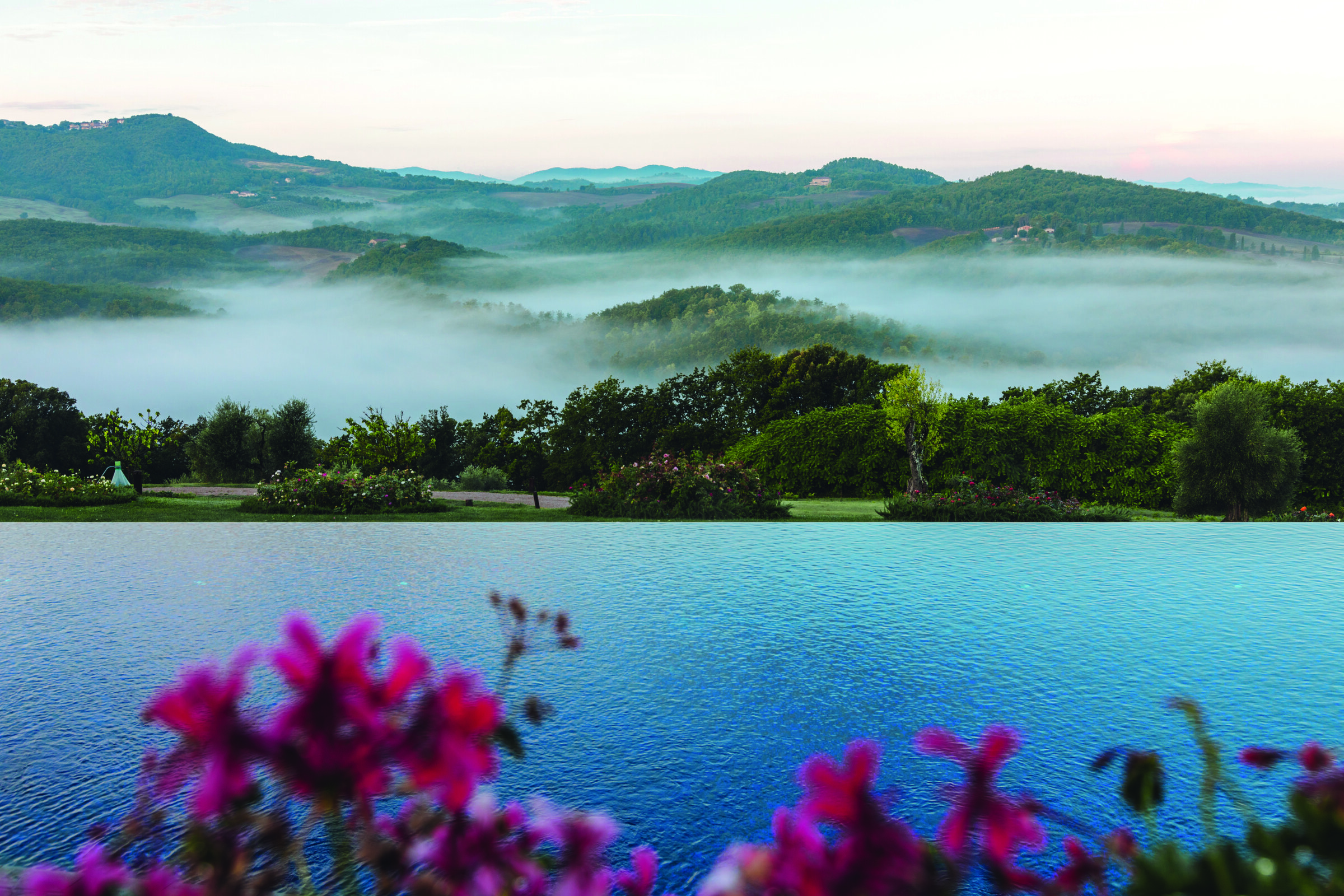
In an era where access often equates to immediacy, Casole offers a different privilege: stillness. There is no village within walking distance, no scene to enter, no social choreography to perform. Days here expand rather than fill.
This stillness is not emptiness, but density of another kind. It allows attention to recalibrate. Light becomes legible. Sound travels farther. Meals extend naturally, unhurried by reservation times or spectacle.
For those accustomed to high velocity, this recalibration is profound. Casole does not distract; it receives.
Why Casole Matters Now
Castello di Casole resonates particularly strongly in the current cultural moment. As luxury travellers grow increasingly sensitive to authenticity, stewardship, and meaning, places like this become rare anchors.
It is not a destination built to impress, but one that rewards literacy — historical, cultural, and emotional. Its value reveals itself over time, through repetition and return. One does not “do” Casole; one inhabits it, briefly joining a continuum far older than oneself.
In Tuscany, many places are beautiful. Few still hold their original gravity.
Castello di Casole is one of them.
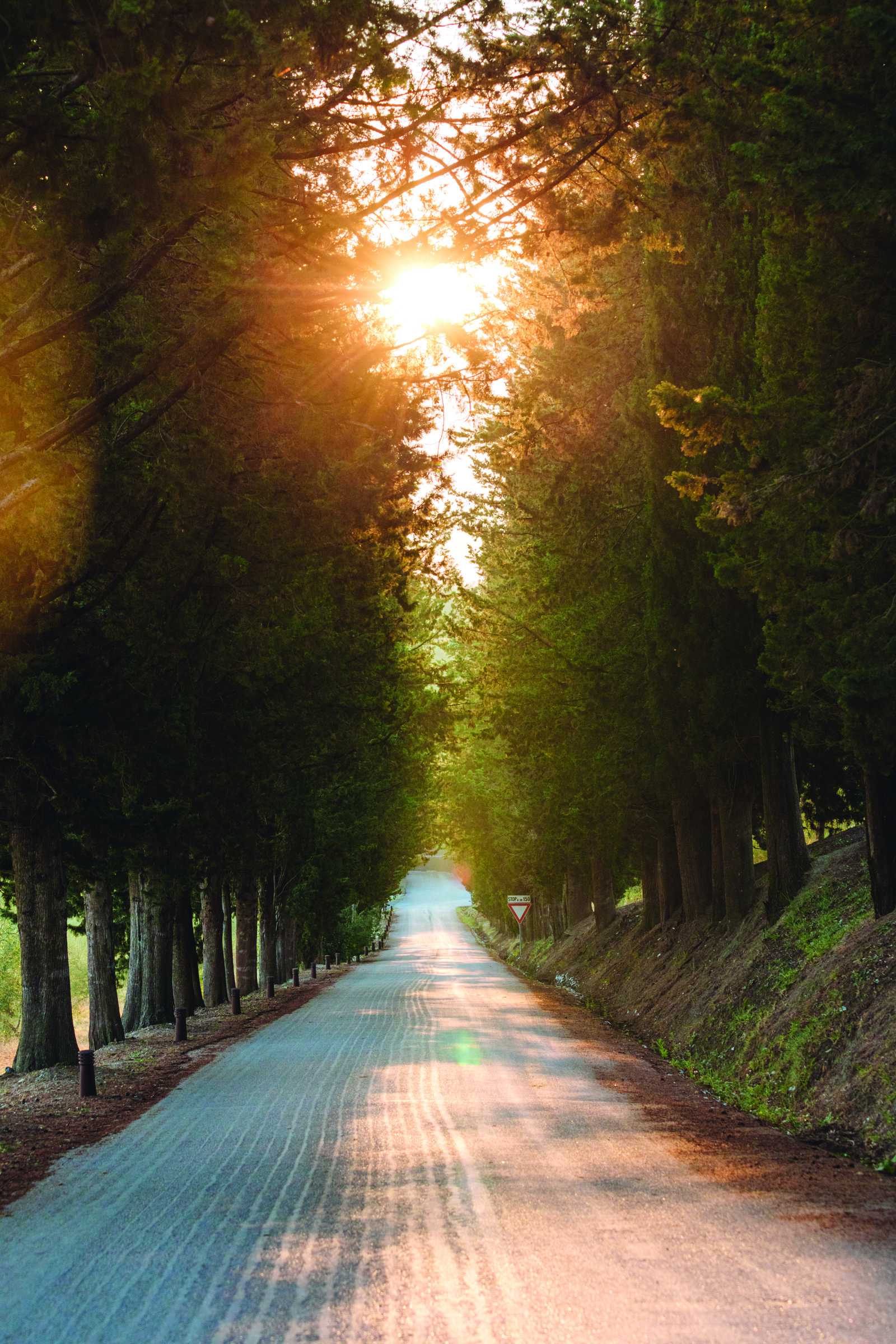
For those considering Casole, the conversation is best framed not around dates, but around timing — personal, seasonal, and intentional.