A 16-day Arctic expedition aboard Ocean Explorer, travelling from Reykjavik via Nuuk into West Greenland’s far north, with Ilulissat Icefjord, Upernavik, Qaanaaq, Smith Sound, Kap Alexander, remote Inuit communities, icebergs, glaciers and Northern Lights potential.
There are Arctic journeys that reveal Greenland’s coast. This one travels toward its northern threshold.
West Greenland: Exploring the Far North is a 16-day expedition aboard Ocean Explorer, designed for travellers drawn to rarely visited places, High Arctic communities, immense ice systems and the deeper geography of Greenland’s west coast.
The journey begins in Reykjavik, continues by charter flight to Nuuk, then sails north along West Greenland toward Disko Bay, Upernavik, Qaanaaq, Kap Alexander and Smith Sound, where Greenland and Canada stand only miles apart across one of the Arctic’s most storied waterways. Conditions permitting, the voyage may reach approximately 78° north latitude, making it the most northerly Greenland expedition in this collection.
This is not a scenic cruise. It is a field-led Arctic expedition shaped by sea ice, weather, wildlife, local partnership and the judgement of a specialist expedition team.
Prezentare generală a călătoriei
Expedition Name: West Greenland: Exploring the Far North
Region: West Greenland, Disko Bay, Ilulissat Icefjord, Upernavik, Qaanaaq, Smith Sound, Kap Alexander, Uummannaq, Eqip Sermia, Itilleq, Sisimiut, Nuuk and Kangerlussuaq
Durata: 16 days
Operational Start / End: Reykjavik, Islanda
Ship Embarkation
Nuuk, Greenland
Ship Disembarkation
Kangerlussuaq, Greenland
Ship: Ocean Explorer
Ship Capacity: Up to 142 guests
Personalul și echipajul: 105 staff and crew
Clasa de gheață: 1A, PC6
Data plecării
2 September to 17 September 2027
Core Experience: Far North Greenland expedition, Arctic Circle crossing, Ilulissat Icefjord UNESCO World Heritage Site, remote community visits, Upernavik, Qaanaaq, Smith Sound, Kap Alexander, Disko Bay, Eqip Sermia, Uummannaq, Itilleq, Zodiac cruising, guided hikes, community encounters, photography, Arctic wildlife observation and Northern Lights potential.
Prețuri
Available on request, according to suite category, cabin availability and any special offers valid at the time of proposal or reservation.
Why This Expedition
This itinerary is the most northerly Greenland voyage in the Arctic portfolio.
Its distinction lies in both latitude and cultural depth. The journey reaches beyond Greenland’s more familiar west coast highlights and continues into the remote far north, a region associated with explorers such as Knud Rasmussen, Robert Peary, Peter Freuchen and the Inuit guide Navarana.
Yet the strongest value is not historical reference alone. It is the living Arctic: fishing harbours, sled dogs, colourful houses, Greenlandic hospitality, communities still closely connected to sea ice, hunting, kayaking traditions and seasonal rhythms.
This expedition is especially suited to travellers who want Greenland beyond the obvious: more remote, more cultural, more exploratory and, in early September, with a strong possibility of witnessing the Northern Lights.
Itinerar
Day 1: Arrive in Reykjavik, Iceland
The journey begins in Reykjavik, where guests arrive independently and check in at the included city-centre hotel.
The rest of the day may be used to explore Islanda’s capital, known for Norse heritage, contemporary architecture, Nordic design, restaurants and coastal atmosphere.
Day 2: Fly to Nuuk and Embark Ocean Explorer
After breakfast, guests and luggage are transferred to the airport for the charter flight to Nuuk, Greenland’s capital.
Upon arrival, guests continue to the pier and board Ocean Explorer, the expedition vessel for the journey north. The ship then begins its passage into West Greenland’s coastal world of fjords, icebergs and Arctic communities.
Day 3: Sisimiut, First Stop Above the Arctic Circle
The first off-ship excursion takes place in Sisimiut, one of Greenland’s most important communities north of the Arctic Circle.
Crossing 66°33’ north latitude marks the beginning of the true Arctic chapter of the voyage. Sisimiut offers a vivid introduction to Greenlandic daily life: colourful homes, working harbours, fishing boats, sled dogs, Arctic cotton grass, local food and the slopes below Nasaasaaq Mountain.
A locally guided walk may include the museum, the harbour area, cultural context and conversations with residents. Guests interested in a more active perspective may choose the optional mountain biking experience through local terrain outside town.
Day 4: Disko Bay, Icebergs and Greenlandic Welcome
In September, Disko Bay carries a particular atmosphere: autumn light, drifting icebergs and the beginning of seasonal transition.
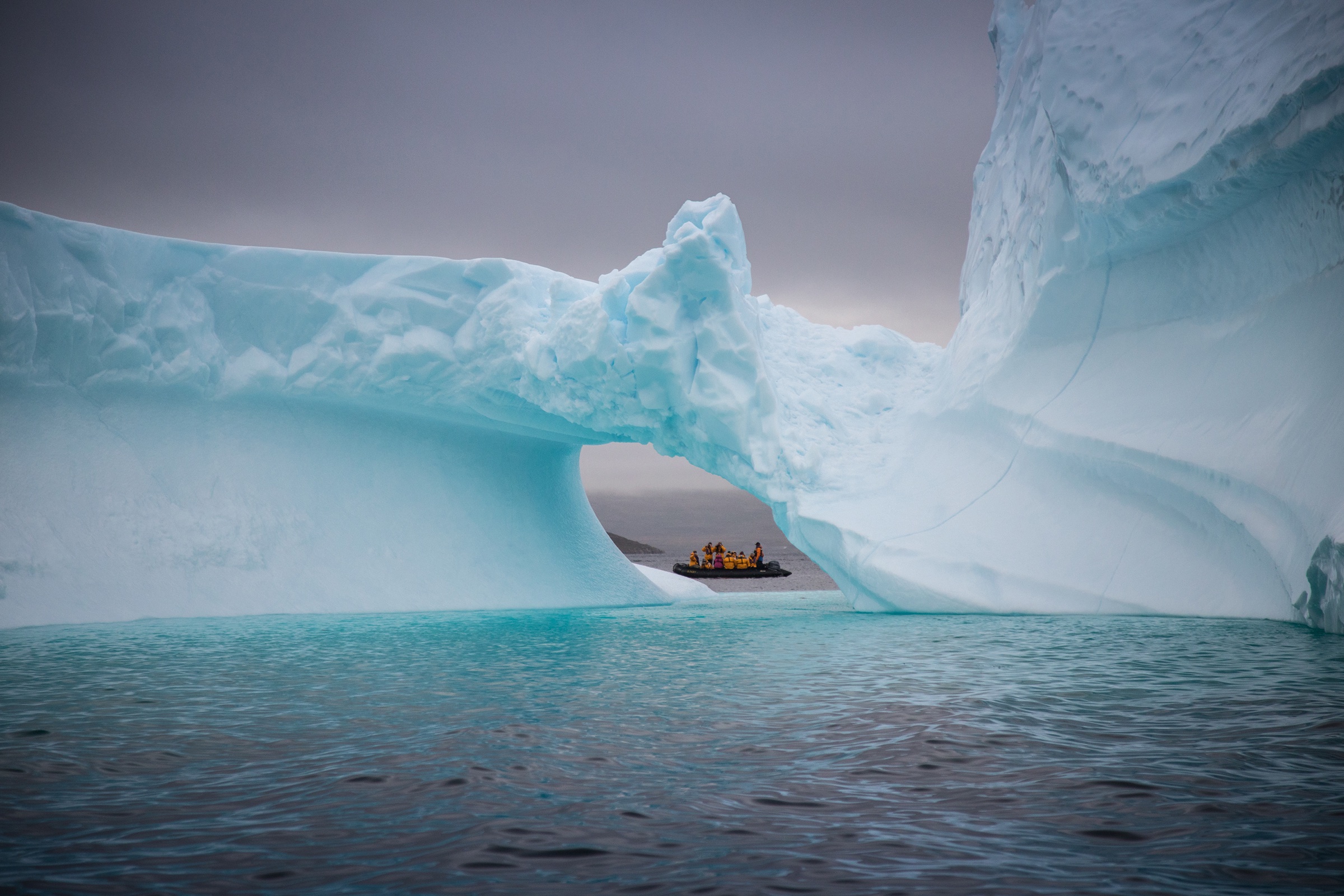
The region is linked to Ilulissat Icefjord, a UNESCO World Heritage Site recognised for its natural beauty and importance to the understanding of ice-cap glaciology. Icebergs in this area appear in every form and scale, some larger than the ship itself.
The expedition may land near Qeqertarsuaq, a small community on Disko Island, where brightly painted homes, quiet streets, skiffs, seasonal rhythms and iceberg views create a softer but deeply atmospheric Greenlandic encounter.
After Disko Bay, the ship begins to push farther north toward Ultima Thule, leaving the more populated regions of West Greenland behind.
Day 5: Upernavik, Remote Community Visit in the Far North
The ship arrives around midday in Upernavik, one of Greenland’s northernmost communities and a place rarely reached by expedition vessels.
With more than 1,000 residents, Upernavik is relatively large for its latitude, yet the pace is quiet and deeply connected to the sea. Brightly painted homes climb the hillside above the harbour, while fishermen, hunters, sled dogs and small boats give the town its working Arctic character.
The visit may include time with local residents, cultural interpretation and the story of Navarana, the Inuit wife of explorer Peter Freuchen, who is buried here. Her knowledge of Arctic travel, coastlines, sea ice and local cultures formed part of the human intelligence behind several major northern expeditions.
Day 6: At Sea, Sailing North into the Vast Arctic Wilderness
A full sea day allows the expedition to continue north toward the highest latitude of the voyage.
This is a day for observation and anticipation: icebergs, possible marine mammals, lectures from the Expedition Team, long views from deck and the feeling of moving into a more elemental Arctic.
On board, guests may attend presentations, spend time in the library or observation areas, speak with expedition specialists and prepare for the far northern region ahead.
Day 7: Kap Alexander and Smith Sound, The Farthest Point North
This is the northern milestone of the journey.
The ship reaches the region of Kap Alexander and Smith Sound, a narrow body of water separating Greenland and Canada by less than 55 kilometres. On clear days, both coastlines may be visible, creating one of the most powerful geographical moments of the expedition.
Sea ice drifting from the Arctic Basin shapes the conditions here. One day may bring packed ice, another more open water. The Expedition Team adapts accordingly, seeking the best opportunities for Zodiac cruising, possible shore landings and wildlife observation.
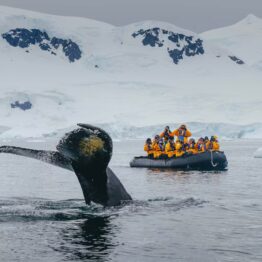
Possible wildlife may include polar bears, muskoxen, Arctic foxes, belugas and migratory birds, always subject to nature and conditions.
This is also a place of atmosphere: long northern light by day, the possibility of aurora after dark, and the feeling of standing near the edge of the inhabited Arctic world.
Day 8: Qaanaaq, Greenland’s Northernmost Community
The expedition continues to Qaanaaq, Greenland’s northernmost community and the second northernmost town in the world after Longyearbyen.
Home to fewer than 700 people, Qaanaaq is reached through waters often filled with large icebergs. Unlike more frequently visited Arctic towns, Qaanaaq remains exceptionally remote and receives very few visitors.
Guests arrive by Zodiac and may explore the town, visit Qaanaaq Museum, meet residents and observe a community where hunting, fishing, sled dogs, traditional kayaks, handmade tools and sea-ice knowledge remain central to life.
Qaanaaq often leaves one of the strongest impressions of the voyage. It is not simply remote on a map. It is a community that continues to live with the land, sea, ice and weather in ways shaped by centuries of adaptation.
Days 9 and 10: At Sea, Southbound to Glaciers and Scenic Shores
The ship turns south, travelling back toward the fjord landscapes north of Disko Bay.
These two sea days allow time for reflection, lectures, photography review and use of Ocean Explorer’s onboard spaces: the two-storey library, observation areas, outdoor decks, lounges, sauna, fitness centre and Jacuzzis.
The return route may reveal icebergs, distant coastlines, seabirds and marine mammals, while the Expedition Team continues to interpret the changing geography.
Day 11: Uummannaq, Mountains, Ice and Greenlandic Smiles
The ship enters Uummannaq Fjord and approaches the community of Uummannaq, whose name means “heart-shaped,” inspired by the dramatic mountain rising above the town.
Guests arrive by Zodiac and may walk through colourful streets, visit the stone church, local museum, artisan market and nearby turf house area. The community is known for warmth, humour and hospitality, with possible kaffemik visits in private homes, where coffee, cake and conversation create one of Greenland’s most personal forms of welcome.
The setting is exceptional: icebergs, fjord, ancient rock, painted houses and a mountain that gives the town its identity.
Day 12: Eqip Sermia, One of Greenland’s Most Active Glaciers
The expedition explores the northern reaches of Disko Bay, possibly including Eqip Sermia, also known as Eqi Glacier.
This tidewater glacier is one of Greenland’s most active, with a wide glacial face that frequently calves ice into the sea. Guests may hear the crackle of brash ice, the movement of ice in the bay and, with luck, the deep sound of calving.
The surrounding terrain allows for shore walks at different levels, from gentler tundra walks to more vigorous hikes toward elevated glacier views.
Day 13: Ilulissat, UNESCO World Heritage Icefjord
Ilulissat is one of Greenland’s most iconic destinations, home to the Ilulissat Icefjord, a UNESCO World Heritage Site.
The icefjord carries enormous icebergs calved from Sermeq Kujalleq, one of the world’s fastest-moving glaciers. A boardwalk leads to an elevated viewpoint, where guests can see icebergs of many sizes spread across the fjord and out toward the sea.
Ilulissat is also the birthplace of Arctic explorer Knud Rasmussen, whose Fifth Thule Expedition remains one of the great journeys of Arctic ethnography and exploration. The town itself offers a blend of history, growth, local life and remarkable ice scenery.
Day 14: Itilleq, Local Community and Football Tradition
The small settlement of Itilleq is known for its warmth and strong community spirit.
With around 100 residents, colourful houses and a seafood-processing building near the pier, Itilleq offers a clear view into life in a small Greenlandic settlement. Guests may be invited to a kaffemik, walk to a viewpoint near the cemetery or take part in a friendly football match with residents, expedition staff and crew.
This is one of the most human moments of the journey: informal, generous and grounded in shared time rather than spectacle.
Day 15: Disembark in Kangerlussuaq and Fly to Reykjavik
The voyage concludes in Kangerlussuaq, formerly known as Søndre Strømfjord.
After disembarkation, guests transfer to the airport for the charter flight back to Reykjavik, where an included hotel night provides a comfortable transition before onward travel.
Day 16: Depart Reykjavik
After breakfast, guests continue independently to the airport or extend their stay in Islanda with private arrangements.
Ocean Explorer: A Refined Polar Vessel for Greenland’s Far North
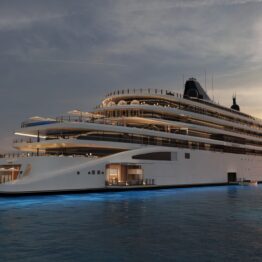
Ocean Explorer is a modern expedition vessel designed for elegant, small-ship polar discovery.
The ship accommodates up to 142 guests, supported by 105 staff and crew, and carries an Ice Class 1A, PC6 classification. Its ULSTEIN X-BOW design supports smoother sailing, while its observation spaces and outer decks are particularly well suited to long-view photography and Arctic landscape watching.
Caracteristicile cheie includ:
Ice Class 1A, PC6
ULSTEIN X-BOW design
142-guest capacity
105 staff and crew
15 Zodiacs for off-ship operations
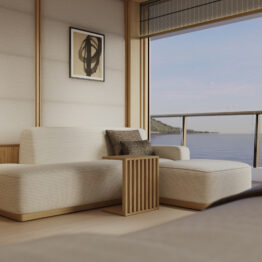
Scandinavian-designed cabins, most with verandas
Two-storey, light-filled library at the bow
Observation lounge and bar
Multi-height outer decks for photography and wildlife viewing
Explorer lecture lounge
Tundra Spa and sauna
Outdoor Jacuzzis
Gym and morning stretch sessions
Health-conscious dining
Sustainability systems including fuel-efficient engines
This vessel is especially well suited to West Greenland’s far north: comfortable enough for extended sea days, small enough for expedition rhythm, and designed around observation, access and learning.
Activități incluse
Activities are always subject to weather, sea, ice, safety and local conditions, but may include:
Zodiac cruising
Shore landings
Guided hiking
Community visits
Presentations by polar experts
Photography guidance
Polar plunge, scheduled once per expedition if conditions permit
Wildlife observation from ship, shore and Zodiac
Locally guided cultural encounters
Optional Adventure Activities
Optional activities are subject to availability, local conditions and advance booking.
Possible options include:
Caiac de mare
A small-group kayaking programme for guests with prior kayaking experience, offered multiple times when conditions allow.
Excursie de canotaj
A gentler one-time paddle on stable sit-on-top kayaks, suitable for guests with minimal or no kayaking experience.
Mountain Biking
A locally guided activity around Sisimiut, using terrain beyond the town boundaries. Participants should be fit and comfortable riding on dirt roads, gravel and uneven trails.
Community and Cultural Context
This expedition is shaped by the communities it visits.
Greenland’s far north is not empty wilderness. It is a lived landscape where local knowledge, sea ice, fishing, hunting, sled dogs, kayaks, food traditions and family life remain central to identity.
Community visits may include Sisimiut, Upernavik, Qaanaaq, Uummannaq and Itilleq, each with a different scale, tone and relationship to the land and sea.
The cultural value of this journey lies in meeting Greenlanders in place: not as a staged encounter, but as part of a carefully coordinated expedition model that respects local rhythm, hospitality and environmental realities.
Possible Expedition Sites
The final route is shaped by weather, ice and operational conditions. Possible sites may include:
Eqip Sermia
One of Greenland’s most active tidewater glaciers, known for calving, brash ice and strong hiking possibilities nearby.
Ilulissat
Home to the UNESCO-listed Ilulissat Icefjord and access to icebergs calved from Sermeq Kujalleq.
Itilleq
A small community known for kaffemik hospitality, colourful homes and a friendly football tradition with visitors.
Kap Alexander and Smith Sound
The northernmost point of the voyage, where Greenland and Canada stand approximately 55 kilometres apart.
Qaanaaq
Greenland’s northernmost community, known for hunting, fishing, sled dogs, kayak traditions and High Arctic adaptation.
Qeqertarsuaq
A small community on Disko Island, framed by iceberg-rich waters and coastal vegetation.
Sisimiut
A major Greenlandic community north of the Arctic Circle, with a working harbour, museum, local food and the slopes of Nasaasaaq Mountain.
Uummannaq
A dramatic island community beneath a heart-shaped mountain, known for fjord scenery, kaffemik, artisan life and Greenlandic warmth.
Upernavik
A remote northern community of brightly painted homes, Arctic exploration history and strong connection to hunting and fishing.
Includeri
Rates generally include:
A 3-in-1 expedition parka to keep
Leadership throughout the voyage by an experienced Expedition Team
Zodiac transfers and cruising according to the daily programme
Shore landings according to the daily programme
Cazare la bordul navei cu menaj zilnic
All meals, snacks, soft drinks and juices on board
Complimentary select beer, wines and cocktails during bar service hours and dinner
Coffee, tea and cocoa available around the clock
Formal and informal presentations by the Expedition Team and guest speakers
Community visits where conditions and local arrangements permit
Photographic journal documenting the expedition
Loan of waterproof expedition boots for landings and Zodiac cruising
Uscător de păr și halate de baie în fiecare cabină
Basic Wi-Fi access on one device, where service permits
Service taxes and port charges throughout the programme
Luggage handling aboard the ship
Greenland cruise passenger tax
The Charter Flight and Hotel Package generally includes:
One night pre-expedition hotel accommodation in Reykjavik, with breakfast
Charter flight from Reykjavik to Nuuk
Group transfer from ship to Kangerlussuaq airport on disembarkation day
Charter flight from Kangerlussuaq to Reykjavik
One night post-expedition hotel accommodation in Reykjavik, with breakfast
Excluderi
Rates generally do not include:
Bilete de avion internaționale
Arrival transfers in Reykjavik
Passport and visa expenses
Government arrival and departure taxes not specifically mentioned
Travel insurance, including baggage, cancellation, interruption and medical cover
Excess baggage fees on international and domestic flights
Mandatory waterproof pants for Zodiac cruising
Laundry, bar, spa and other personal charges unless specified
Phone charges
Voluntary gratuities for shipboard staff and crew
Cazare suplimentară peste noapte
Optional adventure activities not listed as included
Extension Possibilities
Because the journey begins and ends through Reykjavik, private Islanda extensions can be arranged before or after the expedition.
Options may include:
Reykjavik private cultural stay
Blue Lagoon or private geothermal bathing
Golden Circle
South Coast waterfalls
Reynisfjara black beach
Icelandic Highlands by super-jeep
Private culinary experiences
Helicopter or private aviation arrangements in Islanda
Perspectivă exclusivă de călătorie de elită
Pentru Călătorii exclusive de elită clients, West Greenland: Exploring the Far North is the Greenland expedition for travellers who want rarity, latitude and cultural depth in the same journey.
Its distinction lies in travelling beyond the familiar west coast and into a part of Greenland that very few visitors reach. Ilulissat and Disko Bay provide the iconic ice language of Greenland; Upernavik, Qaanaaq, Kap Alexander and Smith Sound bring the journey into the far north, where geography becomes more remote, more historical and more elemental.
This expedition is best suited to travellers who value remote communities, Arctic history, ice landscapes, expert interpretation, photography and the privilege of reaching places where access is still limited by weather, sea and ice.
A request begins with suite category, physical comfort with Zodiac operations and hiking, optional kayaking or mountain biking interest, and any desired private arrangements in Islanda before or after the voyage.